My First Time at Gen Con: Is It Worth $1,000?

My First Time at Gen Con Is It Worth $1,000 Header.png

Let’s just get right into it. Gen Con cost me and my husband $1,000 to attend. That’s two 4-day badges and five nights in a hotel, plain and simple. No gas. No food. No souvenirs. Just the price of being there.

$360.80 for the badges. $629.88 for the hotel. That comes out to $990.68, close enough to round up to a nice, terrifying $1,000.

And that doesn’t even touch the other money we spent to get there. Gas, food, and all the little bits and bobs added up to around $400 more. So really, this trip cost us close to $1,400 when it was all said and done.

Was it worth it? I asked myself that question the entire time I was there. Let’s break it down.

What Even Is Gen Con?

If you’re new to the tabletop world, you might not know that Gen Con actually got its name from the Geneva Convention. The very first one was held in Lake Geneva, Wisconsin, and they shortened it to “Gen Con.” Now it’s held annually in Indianapolis, and it’s the largest tabletop gaming convention in the United States.

We’re talking big numbers here. More than 74,000 people showed up this year. There were nearly 28,000 individual events happening across four days, everything from tournaments to demos to full on role playing campaigns. Vendors had more than 3,000 games on display, and that’s barely a dent in what’s out there. 

I read somewhere that BoardGameGeek has over 150,000 games cataloged. I had no idea the hobby was this massive until I walked through those doors.

The convention brings in something like $80 million to the Indianapolis area every year, just from people eating out and booking hotels. That number doesn’t even count what people spend on the games themselves.

Next year is Gen Con’s 60th anniversary. And yes, we’re already planning to go back…but we’re going to do things differently. More on that in a moment. Let’s first look at how the funds for this year stacked up.

Breaking Down the $1,000

My husband and I went to Gen Con for our 20th wedding anniversary. Nothing says “romantic getaway” quite like standing in a convention hall for four days straight, right? But that’s exactly what we wanted. It was so “us-coded” it felt like fate that our travel day there literally fell ON our wedding anniversary.

Here’s how the badges and hotel broke down:

  • Two 4-day badges: $360.80
  • Five nights in a hotel: $629.88 (We stayed at Red Roof Inn because they are the most accommodating for our Pampered Pomchis)
  • Total for badges and lodging: $990.68

On top of that, we spent roughly $400 on gas, meals, and random extras during our trip. So if you’re planning your own trip and budgeting just for “getting in the door,” know that the real number will end up being higher once you factor in food, travel, and any souvenirs you pick up along the way.

The Math I Was Doing the Whole Drive There

I’ll be honest. On the drive up, I kept running the numbers in my head. A thousand dollars is a lot of money. My husband and I talked it through in the car, and one thing kept coming up. For that same amount, we could have bought 10-20 board games instead. Maybe more.

So which one wins? A bunch of games we could play over and over for years, or four days at a convention that would be over before we knew it?

There’s no easy answer. I’m the kind of person who thrives being around other people who love the same things I love, so my answer is going to be a little biased. But I also think that’s worth admitting up front. If you’re someone who gets more joy out of owning things than experiencing things, Gen Con might not hit the same way for you.

One thing I didn’t expect going in was how much this trip would spark ideas about doing more gaming closer to home. More on that later too.

Getting There and Getting In

We drove up on Wednesday, July 29th, which happened to be our actual anniversary. We checked into our hotel and immediately went to pick up our badges.

Quick tip if you’re planning your first trip: you might want to choose will call over having your badges mailed to you. We’d been having mail issues at our house, and there was a rumor going around that if your badges didn’t show up, you’d have to pay full price again to replace them. Not worth the risk.

The will call line wrapped around the inside of the building. I mean it wrapped around every hallway. It looked like it would take hours, but the whole thing was surprisingly well organized. We were in and out in under an hour.

Parking is its own adventure. If you’re going Monday through Friday, the public parking facility across from the convention center is reserved for state employees only. That knocked out our first choice completely. My advice? Leave earlier than you think you need to, and have a backup parking plan ready to go.

Some folks swear by parking apps, but we opted to not use those this time. Might change our mind next time. We’ll see though because I heard a lot of folks using apps spent way more than we did…

What the Days Actually Looked Like

Once we had our badges, we spent that first evening just getting the lay of the land. We walked through the convention center, over to the J.W. Marriott where more gaming events were happening, and through the block party.

We also had one of the worst meals of ever that night. We tried some noodles that looked and smelled amazing. They were not amazing. I talked to other people in line who felt the same way. Lesson learned. Don’t judge a food stand by its aromas. Ha!

Thursday was when things really kicked off. We spent the day walking through the exhibit hall, seeing games laid out and set up in person for the first time. That’s something you don’t usually get to do when you’re buying board games online. You just see a box and some photos. Here, you could actually see how a game looked on the table before deciding if you wanted it.

I also discovered there are fitness themed tabletop games. One guy had built workouts around a Dungeons and Dragons style theme, and it got me thinking. I’ve already started building a fitness game with my instructor Rhonda using a deck of cards, and after seeing this, we’re adding a set of dice to the mix too. I’ll share more about that soon in our fitness community for our Movers and Shakers.

Friday and Saturday were more of the same, working our way through the rest of the exhibit hall. I started paying attention to something I’d never noticed before: the artwork. Some of these games have absolutely stunning art on the boards and cards, and I found myself getting genuinely excited just looking at it.

By Sunday, we were done. We checked out early (even though it meant we were still out that night’s hotel fees!) and headed home so I could start recovering. Monday morning, I was back at the gym for Zumba and low impact cardio and toning, because apparently four days on my feet wasn’t enough movement for one week.

The Food Situation (Bring Your Own Next Time)

I’m not going to sugarcoat this. We ate terribly the whole trip, and it cost us a lot more than it should have.

We paid $28 for that first night’s nasty noodles. We paid $40 for two burgers and fries that were honestly some of the worst burgers I’ve ever had. When you get busy running from event to event, grabbing whatever food is closest starts to feel like your only option, even when you know it’s not a great one.

Next year, we’re bringing a cooler. Snacks, drinks, maybe even some simple meals we can pack ahead of time. It’ll save us money and probably a stomachache or two.

I’m not a diet girly and I don’t believe in restriction for the sake of restriction. But there’s a difference between enjoying food and just eating whatever’s fastest because you didn’t plan ahead. Next time, we WILL plan ahead.

More Movement Please!

Gen Con is definitely a walking event. A lot of walking. Between the convention center, the hotel, and everywhere in between, I recorded over 36,000 steps across the four days, and I know that number is low. I forgot to turn on my tracker more than once, including our very first night there.

I hit at least 10,000 steps every single day, and one day I broke 12,000 before I even remembered to check. Add in the stairs at our hotel, which didn’t have an elevator, and my body definitely knew it had been to Gen Con.

This mattered so much to me because a year ago, there’s no way I could have done this trip and enjoyed it the way I did. I would have been in pain the entire time, if I could have handled it at all.

Walking through that convention center, I noticed other attendees struggling. I talked to a few people whose ankles were swollen from all the standing and walking, and it took me right back to being that version of myself. I’ve been there. I know what that feels like.

This time was different because I’ve put in the work. I hydrated like it was my job, because trust me, you go through water fast when you’re walking that much. I wore my Asics the entire trip and tested Dr. Scholl’s sports insoles for a couple of days to see if they made a difference. Honestly, I couldn’t tell much of a difference with the Asics I had, so I saved the insoles for my Zumba shoes instead.

If you’re planning your first Gen Con and you’re not used to being on your feet for long stretches, start building that up now. It’ll change your whole experience.

An Interesting Twist…

After all that debate about board games versus experiences, here’s the kicker. We didn’t buy a single board game the entire trip. Not one. We only played two games total, a Dungeons and Dragons style game and a round of Star Realms.

So if you’re measuring the trip purely by “games purchased” or “games played,” it might sound like a bust. But that’s not where the value actually was for us.

The value was in the people. You can walk up to almost anyone at Gen Con and ask what their favorite game is, and they light up. They want to tell you. If you mention wanting to learn something new, people get excited to teach you instead of getting frustrated explaining the rules. That kind of energy is rare, and it’s contagious.

It also got me and my husband talking about starting a regular board game night closer to home. We already have friends who host game nights once a month, and honestly, that kind of regular connection might scratch the same itch Gen Con does, minus the flight and hotel bill. We’re looking into local game store event calendars now to see what’s out there.

So, Is It Worth $1,000?

For us, yes. But I want to be honest about the whole picture before you decide for yourself.

Remember, we spent closer to $1,400 for a five day trip. That’s a lot of money, and it’s not a decision to make lightly.

What you get for it is an experience unlike anything else. Tens of thousands of people who love the same weird, wonderful hobby you do, all in one place, all excited to share it with you. You get to see games in person before you buy them. You get to watch people demo things you’ve never even heard of. And if you’ve been working on your health like I have, you get proof of just how far you’ve come, one step at a time.

We’re already planning to go back for the 60th anniversary next year, and we’re doing it smarter this time. Better parking plan. Packed food. And honestly, if any gear or wellness brands out there want to sponsor a fitness minded first timer turned repeat attendee, my inbox is open. I’d love to partner with someone who wants to help more people move their bodies, even at a gaming convention.

A Few Quick Tips If You’re Going for the First Time

  • Choose will call over mailed tickets if there’s any chance your mail could be unreliable
  • Check parking restrictions ahead of time
  • Leave earlier than you think you need to each day of the convention
  • Hydrate more than feels necessary. You’ll need it
  • Break in comfortable shoes before you go, and consider insoles if you’re prone to foot pain
  • Budget for food separately from your badge and hotel costs, or better yet, pack some of your own
  • Don’t stress about having a perfect plan. You genuinely cannot fully prepare for your first Gen Con, and that’s okay

Gen Con pushed me physically more than I expected, cost me more than I planned, and gave me more than I bargained for. I’ll take that trade every time.

Onwards and upwards, my friends. Have you worked out today?

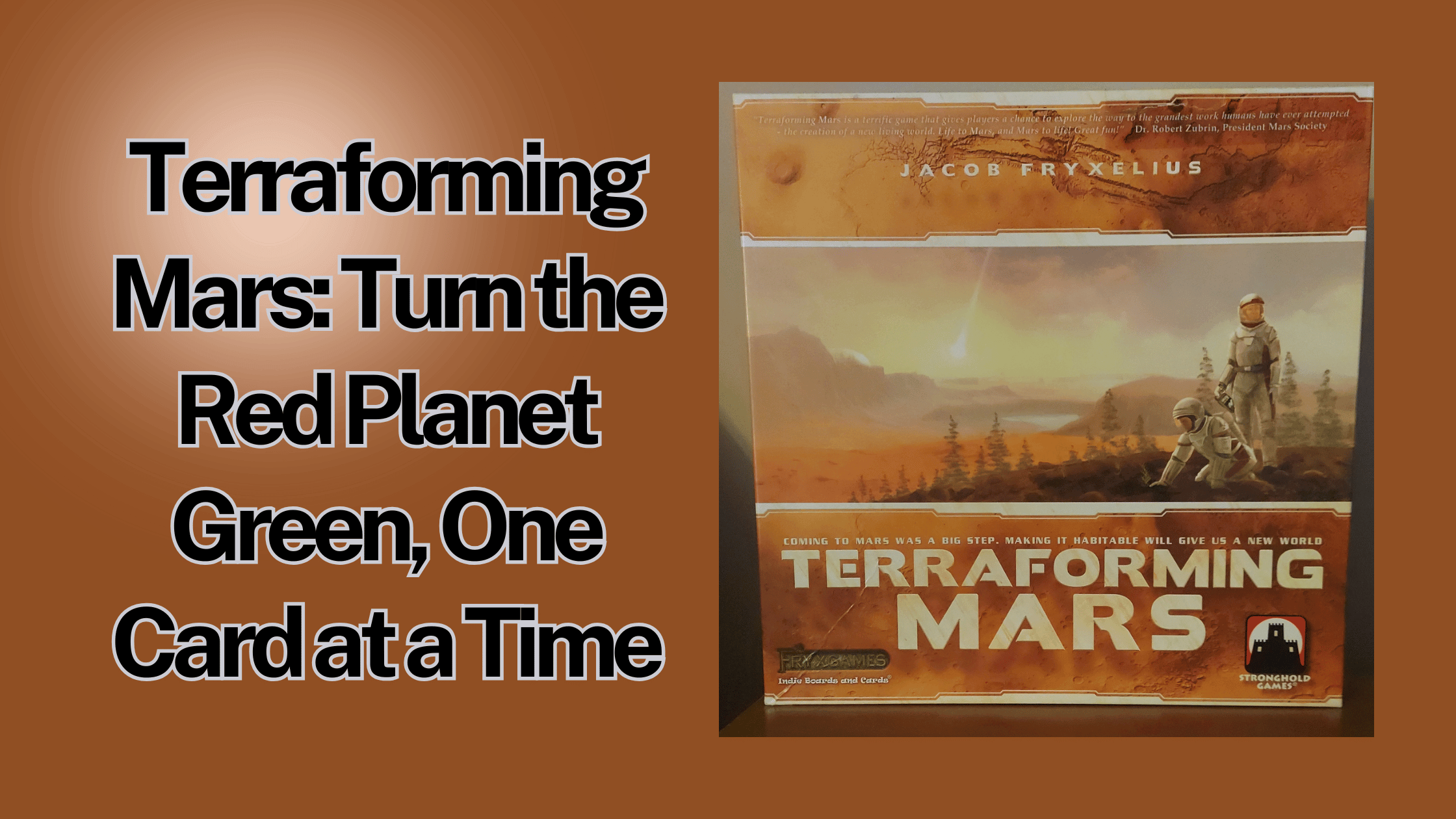
Terraforming Mars: Turn the Red Planet Green, One Card at a Time

Terraforming Mars Review - Header

Raise oxygen levels, warm the planet, and fill the surface with oceans while outpacing rival corporations. My review of the deep strategy game Terraforming Mars.

Players: 1-5   |   Time: 2-3 hours   |   Age: 12+   |   My Rating: 4.5 out of 5 cupcakes

What Is Terraforming Mars?

Terraforming Mars is a strategy game where you play as a corporation competing to make Mars habitable for human life. You’re not fighting anyone. You’re not building armies. You’re raising oxygen levels, warming up the planet, and filling the surface with oceans. And somehow, it’s one of the most engaging games I’ve ever played.

It plays 1 to 5 players and usually takes 2 to 3 hours. There’s even a solo mode where you race against yourself to complete the terraforming before time runs out.

How You Terraform Mars

The game tracks three global conditions: oxygen level, temperature, and ocean coverage. The game ends when all three hit their target numbers. Every time you raise one of those conditions, your Terraform Rating goes up, which both earns you victory points and increases your income.

You raise those conditions by playing project cards. Each card represents a technology, building project, or scientific breakthrough. Some cards place city tiles or greenery tiles on the Mars map. Others give you resources, let you take special actions, or provide ongoing benefits.

The Engine Building Is Everything

Over the course of the game, you build an engine of resource production and card combos. Maybe you’re specializing in plants and cities. Maybe you’re going heavy on science and tech tags to unlock powerful cards. Maybe you’re playing an energy-focused corporation that powers everything else.

Each corporation you start with comes with a unique ability and starting hand, which sets the tone for your strategy from the very beginning.

Hundreds of Unique Cards

The base game comes with over 200 project cards, and almost every card is unique. Finding unexpected combos between cards is one of the most satisfying things about Terraforming Mars. No two games play the same because you’re never drawing the same hand twice.

It’s a Longer Game

I’d be doing you a disservice if I didn’t mention that this game runs longer than most. Plan for at least two hours, probably more with new players. But for the people who love heavy strategy games, those hours fly by. This is a game that rewards your full attention.

Do I Recommend It?

Yes, for strategic thinkers who enjoy building systems and watching them pay off. Terraforming Mars has real depth, excellent replayability, and a theme that actually makes the mechanics feel meaningful. If you’re willing to invest the time, it pays off beautifully.

My Rating: 4.5 out of 5 Cupcakes

A deeply satisfying strategy game with a brilliant theme and near-endless replay value. Highly recommended for patient, strategic players. And no, I’m not just saying this because I won the first time we played! Though, admittedly, that did help me enjoy it more. Haha!

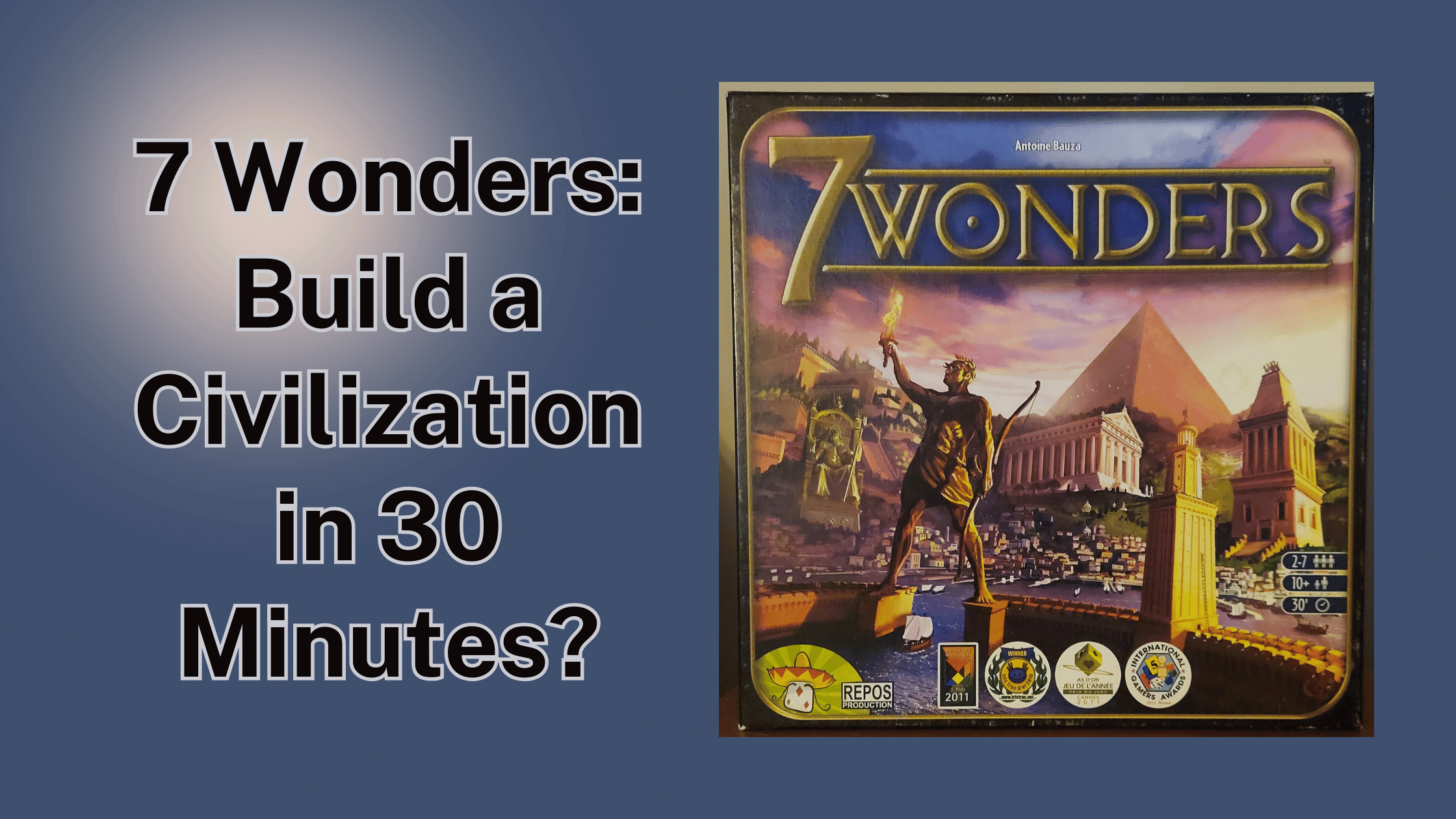
7 Wonders: Build a Civilization in 30 Minutes

7 Wonders_ Build a Civilization in 30 Minutes - Header

Lead an ancient civilization, draft cards, and build your Wonder of the World in just 30 minutes. My full review of the card drafting classic 7 Wonders.

Players: 3-7   |   Time: ~30 minutes   |   Age: 10+   |   My Rating: 4 out of 5 cupcakes

What Is 7 Wonders?

7 Wonders is a card drafting game set in the ancient world. You lead one of seven great civilizations, and over the course of three ages, you’re drafting cards to build resources, develop trade, raise armies, advance science, and construct your civilization’s Wonder of the World.

It allows for 3 to 7 players, and it can be played in about 30 minutes regardless of player count. That’s because everyone drafts simultaneously. There is almost no downtime.

However, this is assuming everyone knows how to play! The set up and explanation for first timers can be daunting and take a while. My family took a good hour to figure out how to play, and to be honest…they still didn’t fully understand how to play throughout the first run through.

How Drafting Works

Each age, everyone gets a hand of seven cards. You pick one, pass the rest to your neighbor, and everyone plays their chosen card at the same time. Then you look at your new hand and repeat. By the end of each age, you’ve each played six cards and discarded one.

Each card you play either gives you resources, points, military strength, coins, scientific symbols, or special abilities. Knowing what your neighbors are building is crucial because you only compete militarily with the two people sitting directly next to you.

Multiple Paths to Victory

This is where 7 Wonders gets really interesting. There’s no single best strategy.

  • You can win by stacking military strength and dominating your neighbors.
  • You can win through science by collecting sets of scientific symbols.
  • You can win through commerce, civic buildings, or guilds.
  • Or you can build your Wonder stages and combine everything for a versatile approach.

Watching everyone’s strategies come together at the end of the third age is genuinely exciting.

Learning the Cards Takes a Game

There are a lot of card types to learn, and the first game can feel a little overwhelming as you figure out what everything does. Stick with it. By game two, the card effects feel natural, and the strategy clicks.

Remarkable for the Player Count

Most games slow down dramatically with seven players. 7 Wonders doesn’t. Because everyone acts at the same time, seven people can finish a game in the same time as three people. For a gaming group that often has a lot of people showing up, that’s genuinely remarkable.

Do I Recommend It?

Absolutely. 7 Wonders is one of the best strategy games ever made for groups. It’s deep without being overwhelming, fast without feeling rushed, and plays beautifully at any player count.

My Rating: 4 out of 5 Cupcakes

An outstanding strategy game that handles large groups better than almost anything else out there. A staple game night pick.

I just wish I had more folks willing to play it with me and the hubster!

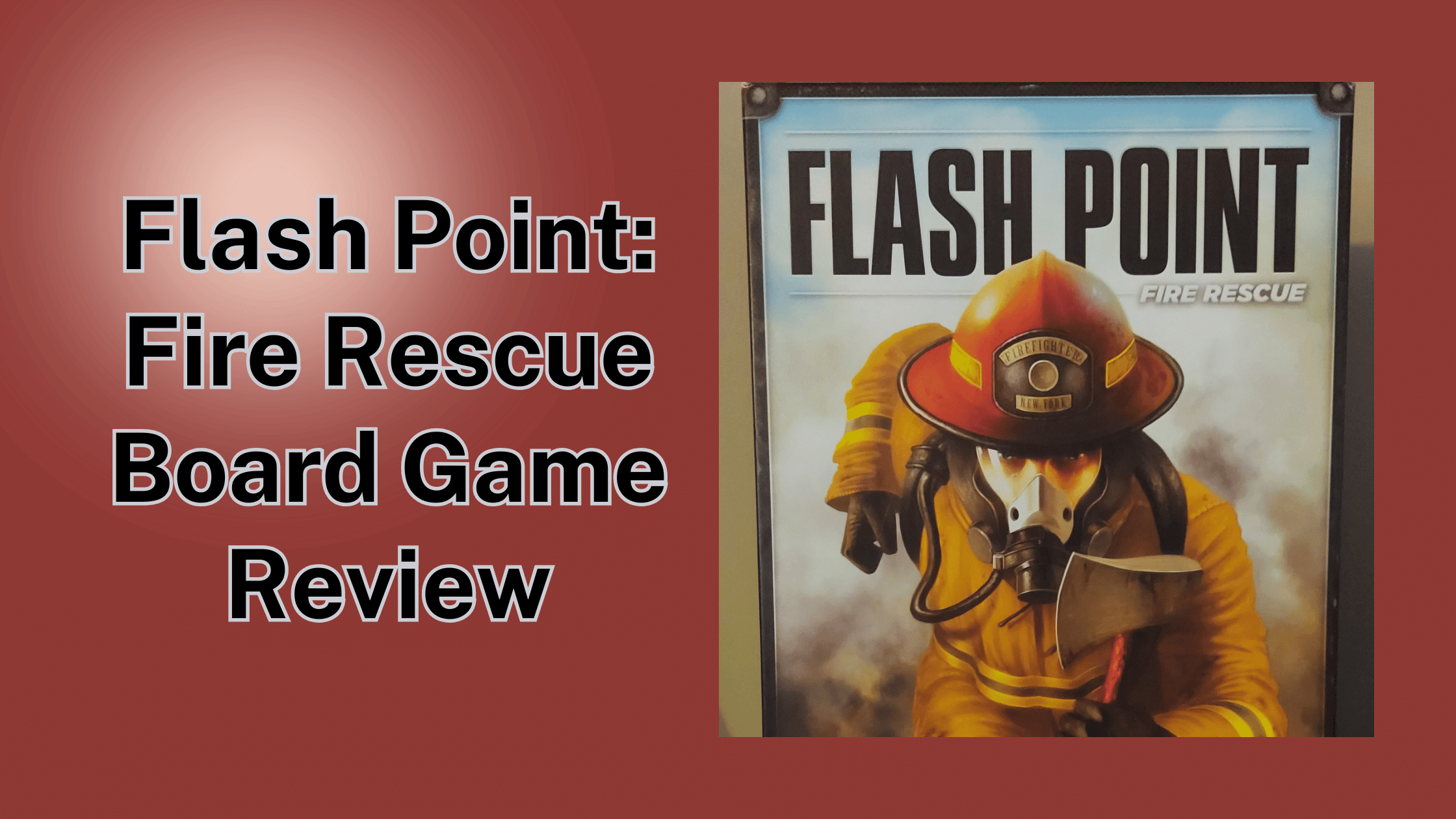
Flash Point: Fire Rescue. It’s Like Pandemic With Flames

Flash Point_ Fire Rescue Review - Header

Rush into a burning building, rescue survivors, and try not to let it collapse. My review of Flash Point and why Pandemic fans will love it.

Players: 2-6   |   Time: ~45 minutes   |   Age: 10+   |   My Rating: 4.5 out of 5 cupcakes

What Is Flash Point: Fire Rescue?

Flash Point: Fire Rescue is a cooperative game where you and your team play as firefighters trying to rescue victims from a burning building before it collapses. If Pandemic had you fighting diseases, Flash Point has you fighting an out-of-control fire. 

The mechanics feel similar, the theme is completely different, and it absolutely works.

It plays 2 to 6 players in around 45 minutes, with options for both a simpler family version and a more complex experienced version for gamers.

How the Fire Works

The building is laid out on a grid. Fire spreads after each player’s turn, following a card draw that places smoke and flames in different rooms. Smoke can turn into fire. Fire can spread through walls and cause explosions. If the building takes too much structural damage from those explosions, it collapses and everyone loses.

Meanwhile, victims are scattered throughout the building. You need to carry them to safety, and you can only carry one at a time. The team wins when seven victims are rescued. You lose if four victims die, or the building collapses.

Spending Your Action Points Wisely

Every player gets a set number of action points each turn. Moving costs points. Opening doors costs points. Extinguishing fire costs points. Carrying a victim costs extra points while moving. You’re constantly doing math in your head, trying to figure out the most efficient use of your turn while the building burns around you.

Specialist Roles Change the Game

The experienced version gives each player a specialist card with unique abilities. The Rescue Specialist moves victims faster. The Fire Captain can command other players’ actions. The Hazmat Specialist handles dangerous materials that would normally block movement. These roles add real strategic depth and variety to repeated plays.

Great for Pandemic Fans

If you love Pandemic and want something with a similar cooperative feel but a totally different setting, Flash Point is exactly the game you’re looking for. The firefighter theme is universally relatable, and the game does an excellent job of making you feel the urgency of a real rescue.

Do I Recommend It?

Yes. Flash Point is an excellent cooperative game that earns its spot next to Pandemic on any shelf. It’s accessible, tense, and incredibly satisfying when you pull off a perfect rescue run.

My Rating: 4.5 out of 5 Cupcakes

Excellent cooperative gameplay with a theme that everyone can connect with. A must-try for fans of team-based board games.

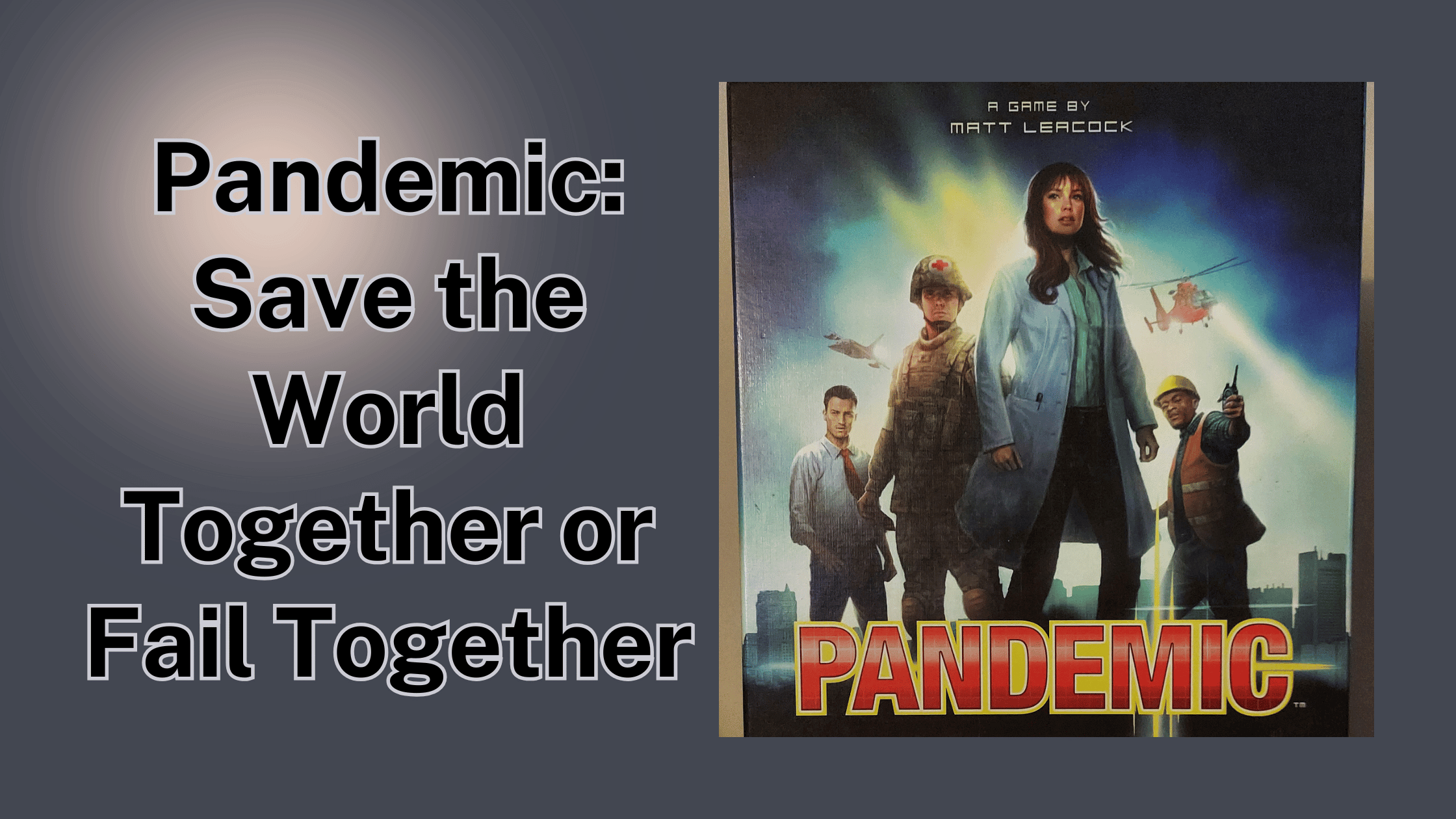
Pandemic: Save the World Together or Fail Together

Pandemic_ Save the World Together or Fail Together - Header

Work together to stop four deadly diseases from wiping out the world. Here’s why Pandemic is one of the best cooperative board games ever made.

Players: 2-4   |   Time: 45-60 minutes   |   Age: 8+   |   My Rating: 4.5 out of 5 cupcakes

What Is Pandemic?

Pandemic is one of the most celebrated cooperative board games ever made. You and your teammates play as disease-fighting specialists trying to stop four deadly outbreaks from wiping out the world. Everyone wins together or everyone loses together. No exceptions.

It supports 2 to 4 players, plays in about 45 to 60 minutes, and is considered one of the best gateway games for introducing people to cooperative play.

How the Game Works

The board shows a world map with major cities marked. At the start of the game, diseases are already spreading. Each turn, a player takes four actions, which can include moving between cities, treating infections, sharing research cards with teammates, or working toward discovering a cure. Then you draw two player cards and flip over infection cards that add disease cubes to cities.

The threat escalates as the game goes on. Epidemic cards buried in the player deck cause outbreaks, raise infection rates, and reshuffle already-infected cities back to the top of the deck. Cities that overflow cause chain outbreaks, and those can spiral fast. The team wins only by discovering all four cures before the diseases overwhelm the board, the player deck runs out, or eight outbreaks occur.

Every Role Feels Different

Each player takes on a specialist role with a unique ability. The Medic removes disease cubes faster than anyone else. The Scientist can discover cures with fewer cards. The Dispatcher can move other players around the board. These roles aren’t just cosmetic. They genuinely change how you contribute to the team’s strategy.

This means no two games feel the same even before you factor in the randomized board setup.

The Tension Is Real

There is something genuinely stressful about watching a new outbreak appear on the board when you were one turn away from finding a cure. Pandemic does tension better than almost any other game I’ve played. And that tension makes winning feel incredible.

Do I Recommend It?

Yes, without hesitation. Pandemic is one of the best board games ever made. It’s collaborative, strategic, stressful in the best possible way, and endlessly replayable. It’s also a fantastic game for two players, which is rare.

My Rating: 4.5 out of 5 Cupcakes

A masterpiece of cooperative game design. This one belongs in every game collection.

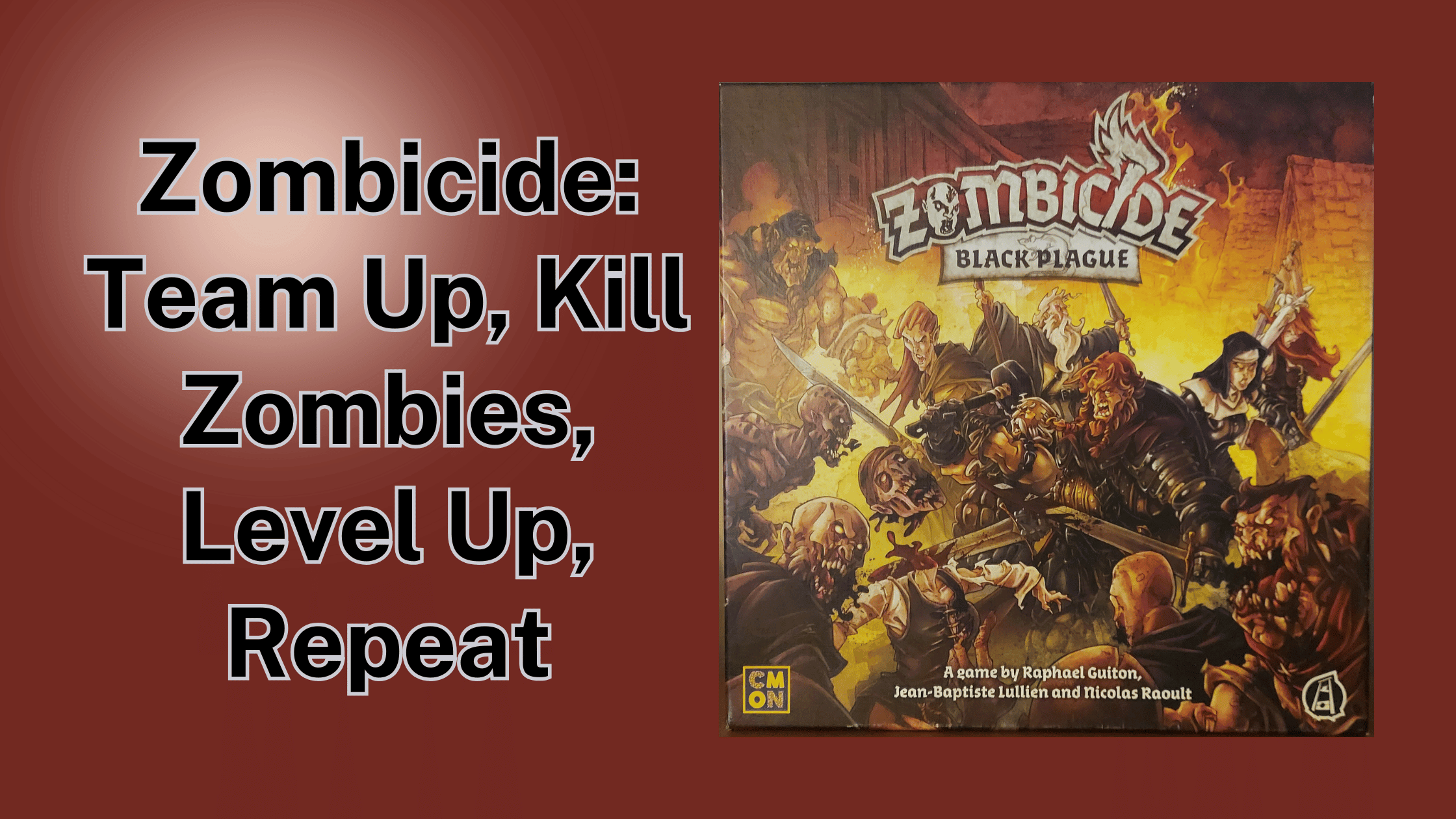
Zombicide: Team Up, Kill Zombies, Level Up, Repeat

Zombicide_ Team Up, Kill Zombies, Level Up, Repeat - Header

Team up, gear up, and survive the zombie apocalypse one mission at a time. My review of Zombicide and why the miniatures alone are worth talking about.

Players: 1-6   |   Time: 60 minutes to 3 hours   |   Age: 14+   |   My Rating: 4 out of 5 cupcakes

What Is Zombicide?

Zombicide is a cooperative zombie survival board game for 1 to 6 players. You and your group each control a survivor with unique abilities, work together to complete mission objectives, find weapons, and try very hard not to get eaten.

It launched on Kickstarter years ago and raised nearly $800,000 from backers before the campaign even ended. Since then, it’s spawned an entire franchise with settings ranging from modern day to medieval to sci-fi.

How the Game Works

Each game session is a scenario with specific objectives. Sometimes you need to collect items. Sometimes you need to escape. Sometimes you just need to survive a certain number of rounds. Whatever the mission, you’ll spend your turns moving, searching for equipment, attacking zombies, or making noise to draw the horde in a direction that helps your team.

After all players take their turns, zombies activate. They move toward the nearest survivor they can see or hear, and if there are no survivors nearby, they follow noise. Managing noise levels is a huge part of staying alive.

Leveling Up Adds Real Excitement

Here’s what I love about Zombicide: your survivors get stronger as you kill zombies. As they earn experience, they unlock new abilities. More actions per turn. Better combat skills. Healing powers. That progression makes you feel genuinely attached to your character over the course of a session.

But there’s a catch. The more zombies you kill, the more that spawn at the end of each round. So getting more powerful also makes the game harder. It’s a brilliantly tense mechanic.

The Miniatures Are Stunning

Let’s talk about the components for a second. Zombicide comes with highly detailed plastic miniatures for every zombie and survivor. They’re gorgeous. The double-sided map tiles create the zombie-infested city, and the whole setup looks incredible on the table. This is not a game that skimps on production quality.

Setup Takes a Minute

I’ll be real with you: the setup can be a little involved depending on which scenario you’re playing. It’s not so bad once you’ve done it a few times, but your first game might require some patience. Totally worth it, but worth knowing ahead of time.

Do I Recommend It?

Yes, for anyone who enjoys cooperative games or zombie movies and shows. This game captures that desperate, band-of-survivors feeling really well. Playing with a larger group is especially chaotic and fun. I’ve only played it with four people, but sure would love to try it with six!

My Rating: 4 out of 5 Cupcakes

A top-tier cooperative experience with amazing miniatures and satisfying progression. Slight setup time is the only thing keeping it from five.

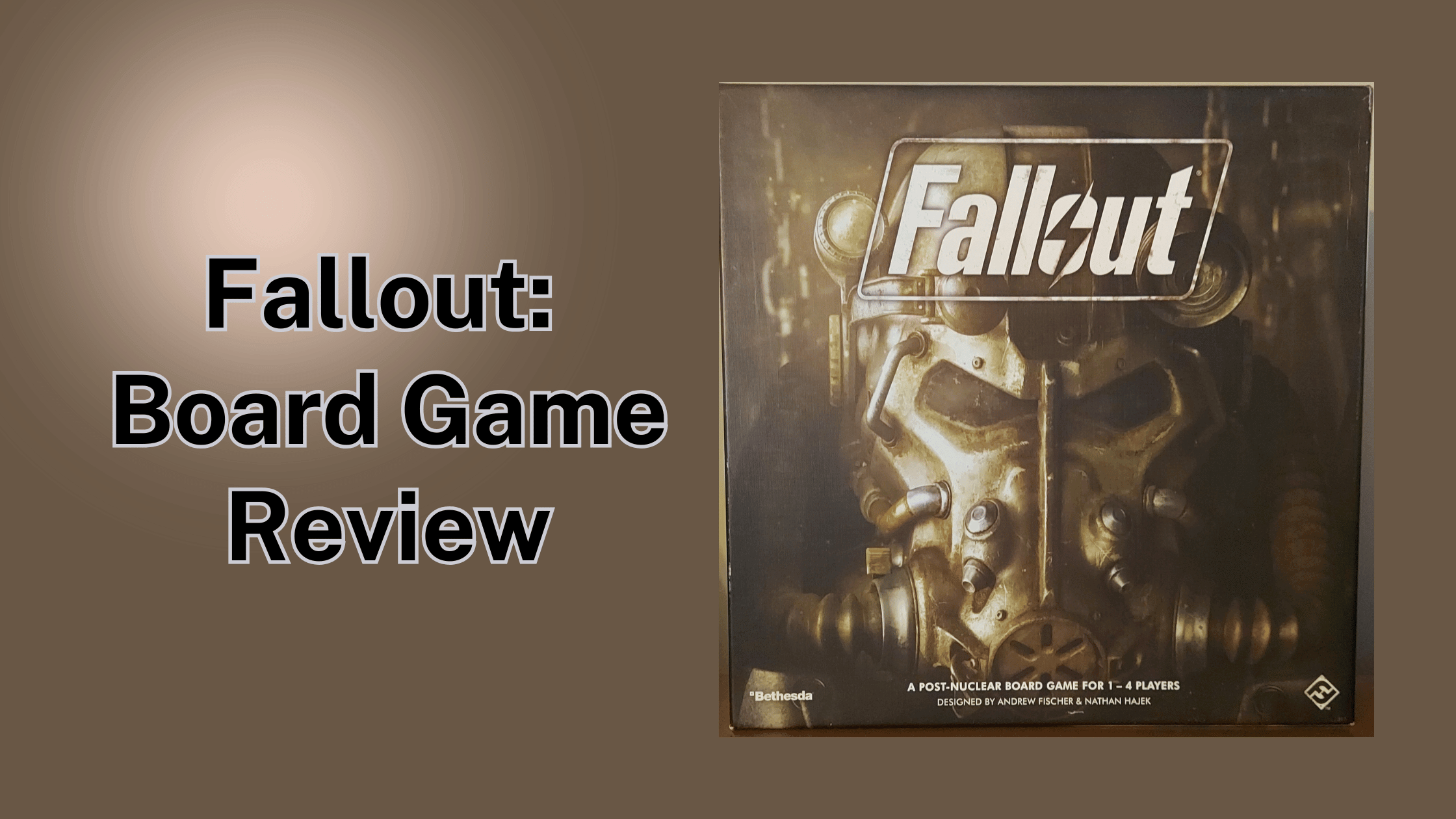
Fallout: The Board Game Review | Survive the Wasteland One Hex at a Time

Fallout_ The Board Game Review - Header

Explore a post-apocalyptic wasteland, complete quests, and navigate warring factions in this narrative board game based on the hit video game series.

Players: 1-4   |   Time: 2-3 hours   |   Age: 14+   |   My Rating: 5 out of 5 cupcakes

What Is Fallout: The Board Game?

If you’ve ever played any of the Fallout video games, you already know the feeling this game is going for. The wasteland. The radiation. The factions. The moral gray areas. The vaults full of weird experiments. Fallout: The Board Game, published by Fantasy Flight Games in 2017, nails all of that.

It’s a narrative adventure game for 1 to 4 players that can be played solo or cooperatively, though players can also compete for the most influence. Games typically run 2 to 3 hours.

How It Works

Players start at the edge of an unknown map. The board uses face-down hex tiles that you flip over as you explore, which means you never fully know what’s coming. You’ll encounter enemies, complete quests, collect loot, and level up your survivor’s skills along the way.

The game includes four different scenarios based on Fallout 3 and Fallout 4, each with its own storyline, objectives, and set of quests. Quests drive the narrative and earn you influence points. Who wins depends on who has the most influence when the game ends, which happens when one faction gets pushed to the end of its power track.

Factions Matter

Like the video games, you’ll have to decide which factions to support or oppose. Push one faction to power too quickly and the whole wasteland falls under their control, ending the game early. Balancing that tension is part of what makes the game so interesting. You’re not just playing for yourself. You’re constantly monitoring the state of the world.

The Vaults Are a Highlight

Scattered across the map are vaults, just like in the games. Discovering one opens up a whole new encounter deck with a self-contained story inside. They’re often bizarre, sometimes unsettling, and always memorable. Finding a vault and seeing what’s inside is one of the best moments the game offers.

Who Is This For?

Fallout fans will get the most out of this one, but it’s genuinely enjoyable even without that background. The storytelling is strong enough to carry anyone into the world. Just know it leans more toward narrative adventure than pure strategy.

Do I Recommend It?

Yes. It’s a rich experience with excellent theme integration and plenty of replay value across the different scenarios. Set aside enough time, grab some snacks, and enjoy the wasteland.

And again, just like Firefly, because this is now also a TV show…we’ve been known to play it while we watch the show.

My Rating: 5 out of 5 Cupcakes

A fantastic narrative adventure with incredible theme. Fallout fans will love every minute.

I definitely love playing this one with my husband. Any time we’ve played, we end up leaving it set up for several days because we’ll play it a while, stop, and then come back later to finish it. We take a long time to play games like this because of how into it we get!

Risk: The Global Domination Game You Either Love or Dread

Risk_ The Global Domination Game You Either Love or Dread - Header

Global domination sounds fun until hour five. Here’s my honest take on Risk, including who it’s really for and what to expect going in.

Players: 2-6   |   Time: 2-8 hours   |   Age: 10+   |   My Rating: 3 out of 5 cupcakes

What Is Risk?

Risk is one of the most famous board games ever made, first published in 1959. The goal is simple. Conquer the world. The path to getting there? Not so simple.

You deploy armies across a map divided into 42 territories and six continents. You attack neighbors using dice rolls. You build alliances, break them when convenient, and try to control enough territory to keep growing your army. The last player standing wins.

How Attacks Work

Combat in Risk is all about dice. The attacker rolls up to three dice, the defender rolls up to two, and you compare the highest results. The side with the lower roll loses an army. Ties go to the defender.

What this means in practice is that even a powerful army can get worn down by a defender who keeps rolling high. The dice have humbled many would-be world conquerors. One moment you’re unstoppable, and then five rounds of bad rolls later, you’re down to five armies wondering what happened.

The Continent Bonus

Controlling complete continents earns you bonus armies at the start of each turn. Australia, for example, is small and easy to defend with only one entry point. North America is bigger and worth more. Holding a continent and defending it well is one of the key strategies in the game.

The Elephant in the Room: Time

I’ll be honest with you. Risk can take a very long time. We’re talking potentially four to eight hours for a full game. Some people love that. It’s an epic experience when you’ve got the time for it. But if you don’t have an entire afternoon free, you might find the length frustrating.

There are faster variants and different editions with adjusted rulesets if you want to shorten things up, and those can help a lot.

The Alliances and Betrayals

The social drama in Risk is real. You’ll make a deal with someone to leave each other alone, and then watch them break it the moment it benefits them. That betrayal moment is actually one of the things that makes the game memorable. It’s a lot like watching a political drama unfold on your dining room table.

Do I Recommend It?

Sure, but with some caveats. Risk is worth playing at least once. It’s a rite of passage for board gamers. But go in knowing it’s a significant time commitment, and make sure everyone at the table is genuinely up for a long game. If someone gets eliminated early and has to wait hours for the game to end, that’s not a great experience.

My Rating: 3 out of 5 Cupcakes

A legendary game that earns its reputation, but the length and dice-dependent combat hold it back for me. Play it once for the experience, but know what you’re signing up for.

There’s a reason I have only played this a handful of times. Lots of little pieces. Lots of setup. Trying to figure all the things out about how to play. And, on top of that, keeping things straight while you play…yeah, not my favorite game, but still worth playing.

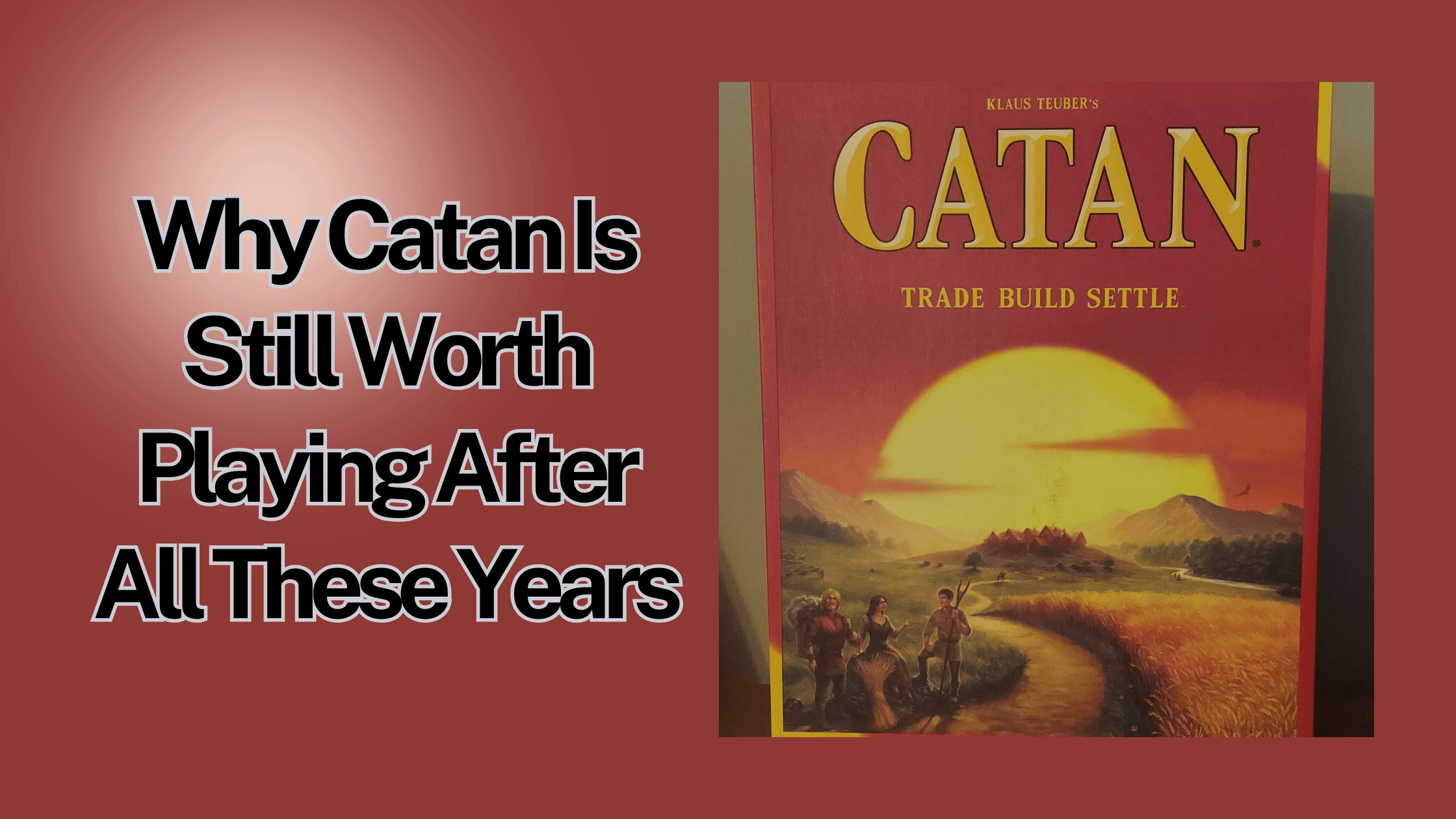
Why Catan Is Still Worth Playing After All These Years

Why Catan Is Still Worth Playing After All These Years - Header

The game that turned millions of people into board gamers. Here’s why Catan is still worth playing and what makes it such a classic.

Players: 3-4 (up to 6 with extension)   |   Time: 60-90 minutes   |   Age: 10+   |   My Rating: 4 out of 5 cupcakes

What Is Catan?

If there is one board game responsible for pulling millions of people away from Monopoly and into the modern board game world, it’s Catan. 

Originally called The Settlers of Catan when it launched in Germany in 1995, this game has sold over 45 million copies worldwide and been translated into 40 languages. It’s basically the gateway drug of hobby board gaming.

The concept is straightforward. You’re a settler trying to build the most thriving colony on the island of Catan. You collect resources, build roads and settlements, and race to 10 victory points.

How the Board Works

The board is made up of hexagonal terrain tiles, and every game the board is randomized. So no two games look the same. Each hex produces a different resource: lumber, brick, grain, wool, or ore. When a matching number is rolled at the start of each turn, the hexes with that number produce resources for any player with a settlement or city touching them.

This means where you place your first two settlements is one of the most important decisions in the whole game. Good positioning gives you a steady resource flow. Bad positioning can leave you struggling to get anything done.

Trading Is Everything

Here’s the thing that makes Catan special: you have to trade to win. You will never have exactly the resources you need at the right time. So you negotiate with other players. 

‘I’ll give you two wood for one brick.’ ‘Anyone need sheep? I have way too many sheep.’ 

The trading table is where Catan really lives.

Of course, those negotiations can get cutthroat too. Nobody wants to trade with the person who’s already winning. That social layer turns what could be a dry resource management game into something much more dynamic.

The Robber Keeps Things Spicy

Roll a seven and you get to move the robber. The robber blocks a hex from producing and lets you steal a card from someone nearby. Rolling a seven at the right moment to derail a rival’s plans is one of Catan’s most satisfying moments.

Do I Recommend It?

Yes. Catan deserves its reputation. It’s approachable, strategic, and social in ways that most games aren’t. If you’ve never played it, you owe it to yourself to sit down for a game.

My Rating: 4 out of 5 Cupcakes

A stone-cold classic that holds up. Trade wisely, settle smart, and try not to be the person who hogs all the sheep.

Bang! The Wild West Hidden Role Game That Never Gets Old

Bang! The Wild West Hidden Role Game That Never Gets Old - Header

Hidden roles, Wild West shootouts, and just enough paranoia to make every round unforgettable. Here’s my full review of the Bang! card game.

Players: 4-7   |   Time: 20-40 minutes   |   Age: 8+   |   My Rating: 4 out of 5 cupcakes

What Is Bang!?

Bang! is a Spaghetti Western card game all about secret roles, shootouts, and the kind of paranoia that makes you look twice at the person sitting next to you. It was designed in Italy in 2002 and went on to win the Origins Award for Best Traditional Card Game in 2004. It’s been a hit ever since.

The game plays 4 to 7 people in 20 to 40 minutes, and it works best when everyone leans into the bluffing and social deduction elements.

The Role System

Here’s how it works. At the start of every game, each player is dealt a secret role card. The Sheriff’s role is public, but everyone else keeps their card hidden. The roles are Sheriff, Deputies, Outlaws, and a Renegade.

The Sheriff needs to eliminate all the Outlaws and the Renegade. Deputies win if the Sheriff does. Outlaws win if the Sheriff gets eliminated. And the Renegade? That player needs to be the absolute last one standing, which means playing both sides just long enough to be the final survivor.

How Gameplay Works

Each player also gets a unique character card with a special ability. One character draws extra cards whenever they take damage. Another can use any card as an attack. These abilities add a layer of personality to every player’s style.

On your turn, you draw two cards, play as many as you want from your hand, then discard down to your hand limit. The classic Bang! card lets you shoot at someone within range. Missed! cards let you dodge attacks. There are also weapons, horses that change your range, and various other action cards that keep things spicy.

The Paranoia Is the Point

Because most roles are secret, you spend a lot of time trying to figure out who’s who. Someone attacks the Sheriff. Are they an Outlaw or is the Renegade just making a move? Someone helps the Sheriff. Are they a Deputy or is the Renegade trying to gain trust?

The social reading in this game is genuinely fun. And when someone’s role is finally revealed, there’s often a collective gasp around the table.

Do I Recommend It?

Yes, especially for groups who enjoy hidden role games and a bit of social chaos. It’s fast enough to reset and play again if someone wants revenge, and the unique characters keep the game from feeling the same twice.

My Rating: 4 out of 5 Cupcakes

A classic social deduction game with a unique identity. Great for groups of five to seven players who love a little mystery with their card games.

Highly recommend trying to play with seven people though. It’s more fun when all seven roles are taken!