Thanks to my relationship with Tampa Bay Bloggers and Envy Apples this blog was compensated for this post, and some social media love. This has not impacted my post, and all opinions are my own. This post also contains affiliate links that provides this blog with a small commission if you purchase through them, at no additional cost to you. Thanks for your support!
I LOVE apples. Like a lot! And so when I got the chance to make a recipe with Envy Apples, I knew just what to make. I had to call my Granny Betty and get permission to share the recipe though. Lucky for y’all she was happy to help.
Now, don’t let the name fool you. Just because they recipe calls for Mountain Dew doesn’t mean it’s going to taste like the soda. And, it won’t be all green and alien looking either.
Instead, the soda comes together with the other ingredients to create a delicious concoction that almost has the consistency and texture of a softer apple pie.
Trust me!
These apple dumplings are fantastic! Add a scoop of vanilla ice cream and you have a tasty dessert that will be polished off faster than you can ask for a second helping!
Have a drink you want me to try or a product you want me to review? Contact me HERE! I’m PR friendly
The amounts in the recipe listed below make 16 dumplings, but because it’s just me and my husband, I cut this recipe in half. You can also add a little more cinnamon to your apples if you prefer, but I liked them just lightly dusted personally.
Be sure to use Envy Apples when you make your dumplings too, by the way. They are perfect for this recipe, and come out just as soft as you could possibly want in a dessert like this. Sooooo good! Alright, enough talk…let’s get to the yummy recipe, shall we?
5. Wrap each apple slice with one crescent roll, enclosing it completely, then place in the pan
6. In a saucepan, melt the butter and add the sugar and bring to a slight boil, stirring constantly
7. Pour the sugar and butter mixture over the top of the dumplings
8. Finally, pour the can of Mountain Dew over the dumplings
9. Bake at 350 for 45 minutes
10. Pull out of the oven and let cool for 10 minutes, then serve warm with ice cream or whipped cream
I opted for ice cream with my dumplings. Soooooooooooooooo tasty. I think this recipe is perfect for any time of year, but I know for sure I’ll be making it again for Christmas dinner!
What do you think? Are you willing to give this recipe a try? Or, if you did try it, leave me a comment below and tell me what you thought of it!
Also be sure to try my Apple Cider Martini! Click the image below to get the recipe:
While this Cran-Apple Chicken Salad Appetizer post was sponsored by Envy Apples in partnership with Publix Apron's Schools, all opinions are my own. This post may also contain affiliate links.
I LOVE apples. More specifically, I LOVE Envy Apples. That’s why when they reached out and asked me if I had any interest in creating another recipe for a sampling night at Publix Apron’s Schools, I jumped at the chance to do so. Last year in 2018, I shared my Granny Betty’s Mountain Dew Apple Dumplings. This year, instead of a dessert, I wanted to do an appetizer that could easily double as a quick lunch or after workout snack.
I chose to make a Cran-Apple Chicken Salad Appetizer on apple slices. While I often eat chicken salad on a croissant, or hamburger bun, I wanted to make this version low carb and gluten-free so that even if I’m trying to watch my diet, I can indulge in this delicious snack. Here’s how I made it:
Cran-Apple Chicken Salad Appetizer
Ingredients
– Approximately 1 1/2 cups of rotisserie chicken chopped (I pulled it right off of a Publix rotisserie chicken!)
– 1/4 cup celery chopped into small pieces (I used Dandy pre-washed celery because it has such a great crunch and I don’t have to cut or wash anything. It’s ready right out of the bag!)
– 1/3 cup of mayo*
– 1/3 cup of sour cream*
– 1/4 cup of dried cranberries chopped (I used Craisins)
– 1/4 cup of grapes sliced
– 2 or 3 medium sized apples (I used Envy Apples – highly recommend these because they don’t brown as fast as other brands)
-A handful of crushed walnuts (optional!)
Instructions
1. Mix all ingredients except for the apples in a bowl
2. Salt and pepper to taste, mix again, and then chill your chicken salad mix in the fridge for about an hour
3. Wash and dry your apples
4. Cut thin slices of your apples. You want them just thick enough to hold something on them.
5. Lay the slices onto a serving platter
6. Scoop about 2 tbsp of chicken salad mix onto each one of the apple slices
7. Serve and enjoy!
*Recipe note: If you like your chicken salad a little drier, cut the mayo and sour cream back to 1/4 cup each.
This Cran-Apple Chicken Salad Appetizer is perfect for barbecues, baby showers, and all kinds of parties!
The weekend I made these we went to a Memorial Day weekend party and they were a hit! The cold chicken salad on a crisp apple slice was the perfect kickoff to a delicious barbecue. You can make a huge batch of these before any party.
If you won’t be serving them for a while you can soak your apples in a bath of Sprite before hand. Envy Apples already keep their color a long time, but the Sprite adds even more time before browning occurs.
About the Envy Apples I Used in my Cran-Apple Chicken Salad Appetizer
Envy TM apples are premium apples with extraordinary crunch and texture and refreshingly sweet
Envy TM have naturally higher citric acid content which prevents the ‘browning’ enzyme from activating. This means they are VERY slow to brown, which makes them ideal for kid’s lunches, picnics, salads, charcuterie boards and party platters – they will look great for hours!
Envy TM is cross between Braeburn and Royal Gala. They are non-GMO and are grown naturally in Washington State and New Zealand.
Envy TM apples can be found nationwide at grocery stores including: Publix, Whole Foods, Walmart, Market 5 one 5, Central Market, Raley’s, King Soopers, IGA, Wegmans and more. For the store nearest you, visit envyapple.com and click on the
I paid my own way to Gen Con 2026 and turned four days on the convention floor into more than 100 pieces of content. Picture what I can do when a brand is in my corner.
No sponsor sent me, but I would love to find a partnership that is mutually beneficial. My husband and I bought the badges, booked the hotel, and covered about $1,400 for the whole trip. I still showed up with a plan, posted before, during, and after, and kept the coverage rolling for almost five months.
Below is exactly what I made, how I made it, and how I’d do the same for your company at the next event.
The Snapshot
What
The result
Who paid
Me. About $1,400 total, with $990.68 of that going to badges and hotel
Coverage window
May 14 to Oct 5, 2026, nearly five months of content!
Social posts
49 posts, each one on both Instagram and Facebook (98 live posts)
Before, during, after
10 pre-event, 12 live, 27 post-event
Long-form
3 blog posts and 3 podcast episodes
Series I built
A 30-day Gen Con recap and a 4-part finance mini-series
On the ground
36,477 steps tracked across four days
The event
74,000+ attendees, nearly 800 vendors, nearly 28,000 events, $83.5 million for the local economy
The Goal
Gen Con is the biggest tabletop gaming convention in North America, and 2026 set a record. Gen Con’s own press release reported 74,000+ attendees from more than 45 countries, nearly 800 publishers and vendors, and an estimated $83.5 million in local economic impact.
It was my first one, and it fell on my 20th wedding anniversary. I set three goals:
Prove I can cover a huge event on my own dime. No comped badge, no free hotel, no safety net.
Report from the floor as a movement-first creator. Fitness and tabletop gaming don’t usually share a sentence. I made them share a month.
Build a system I can hand to a sponsor. Every post, episode, and page had to repeat, so your brand can plug into it next time.
What I Did
I didn’t show up and hope for something good to happen. I covered the event in three phases.
Before: 10 posts, May 14 to July 27
I announced the trip three and a half months out, so my audience was already along for the ride by the time we left.
Shared the anniversary story and the games we planned to pack, including Firefly, Exploding Kittens, and Star Realms.
Posted the research on why board games aren’t a waste of time (University of Plymouth), which gave gamers something to share.
Asked my audience for road-trip food advice so we wouldn’t bleed money at the convention.
Published a prep blog post and podcast episode (Episode 74) on getting my body and my bag ready for four straight days of walking.
During: 12 posts, July 30 to August 2
Live, quick, and unpolished on purpose. That’s what makes it feel real.
Posted step-count check-ins all day long, from 4,272 steps at lunch to 12,000+ by night.
Gave a live safety update when a tornado warning hit Saturday and the convention center started leaking.
Wrapped the weekend with a “that’s a wrap on my first Gen Con” post the moment we hit the road.
After: 27 posts, plus blog and podcast, August 3 to October 5
August 24: A podcast episode, “36,477 Steps: What Gen Con Taught Me About How Far My Body Has Come.”
September 1 to 30: A 30-day recap series. Each post paired one movement tip from the convention floor with a game or vendor spotlight and my own cupcake rating.
Four Wealth Wednesdays: “The Finances of Gen Con,” a four-part mini-series covering badges and hotel, food, the event’s numbers, and the final verdict.
October 5: A podcast episode and page on travel fitness, packed with convention-floor lessons, plus an open invite to sponsors for 2027.
The Results: A Content System, Not a One-Off
One trip gave me six formats that already work. Every one of them can carry your brand.
Format
What it is
Gen Con proof
Hype posts
Build excitement and ask the audience to weigh in
10 pre-event posts on Instagram and Facebook, plus a prep episode and blog post
Live floor updates
Fast, honest check-ins from the event
12 posts in four days, including step counts and a live safety update
Spotlight series
One useful tip tied to one game or vendor, with my rating
30-day recap. Flash Point: Fire Rescue earned 4.5 out of 5 cupcakes
Honest numbers series
Real costs, real verdicts, no sugarcoating
“The Finances of Gen Con,” four Wealth Wednesdays
Long-form recap
A blog post people can find, share, and link to
“Is It Worth $1,000?” on August 14
Podcast episodes
Audio and video episodes that carry the story to my community
Episodes 74 and 112, plus the October 5 travel fitness episode
I follow through. I posted before, during, and after, and finished a 30-day series.
I plan. The content plan existed before the trip did.
I’m useful. Every post gave the reader something to do, not just something to look at.
I’m still talking about it. The content kept going for two months after the event ended.
What I Can Do for Your Company
Hand me a badge, a booth, or a product, and I plug your brand into the system you just read about. Here’s what that looks like.
What you get
How it works
Pre-event buzz
Posts that put your booth, product, or panel in front of people before the doors open
On-the-ground coverage
Live posts from your space, a real demo, and my honest reaction
A 30-day spotlight series
Your brand worked into movement tips and spotlights, spaced out so you get a month of attention instead of one day
A video episode on More Movement Please
Your story told to my community, with its own page on my site (show notes, chapters, transcript) and a Pinterest pin
A long-form blog recap
A page that keeps working in search long after the event
A Substack mention
A spot in my weekly “Becoming Famous Ashley Grant” series, where I document growing my brand and sponsorships in public
A wrap-up report
Every link in one place, so you can show your team what you got
The format changes with your goals. A footwear brand gets a different angle than a tabletop publisher, and a hydration brand gets a different angle than a hotel.
Who this fits
Shoes, insoles, and recovery gear
Resistance bands, bags, and workout gear on the go
Hydration, snacks, and wellness products
Travel and hotel brands
Tabletop and board game publishers
Anything that helps people move more at events and conventions
I tell the truth, and that’s your edge
The trip cost me $1,400. My ankles hurt. The food was overpriced, and I said so in public. That’s why my audience believes me when I say something is worth it. A sponsored post from me reads like a friend’s recommendation, because it is one.
Let’s Work Together
Gen Con returns August 5 to 8, 2027, for its 60th anniversary, with a bigger convention center and a brand new Signia by Hilton hotel. I’m going, and this time I’m going with better parking, a cooler full of snacks, and room for a partner.
I’m also looking at other 2027 conferences and conventions including FinCon, Dragon Con, TasteMaker Conference, Podcast Movement and many others. If you want an on-the-ground correspondent who shows up with a plan, captures everything, and turns a few days into a month of content, I’d love to talk.
Packing for a trip and worried your workouts will fall apart? A physical therapist shared the exact items she never travels without, and a few of them surprised me.
In this episode of More Movement Please, I break down Ashley Katzenback’s travel fitness packing list, from hydration and recovery gear to the tiny tool that fits in your purse. You’ll hear what she packs (electrolytes, a shaker bottle, compression socks, a lacrosse ball, a resistance band, plus creatine and sleep supplements), what I already use on the road, and what I’m going to test next. I just got back from Gen Con, so I’ve got real convention-floor lessons on staying fueled, hydrated, and moving when you’re on your feet all day.
I’m also looking ahead to 2027 conferences and conventions, and I’m open to sponsors who want an on-the-ground correspondent to report back on what I see and learn. Plus, I want to know where you think I should go next.
Hit play, grab your carry-on, and let’s get you moving, even when you’re far from home. Have you worked out today?
⚠️This podcast is for entertainment purposes only and is not medical advice. Please consult a healthcare professional before starting any diet or exercise program.⚠️
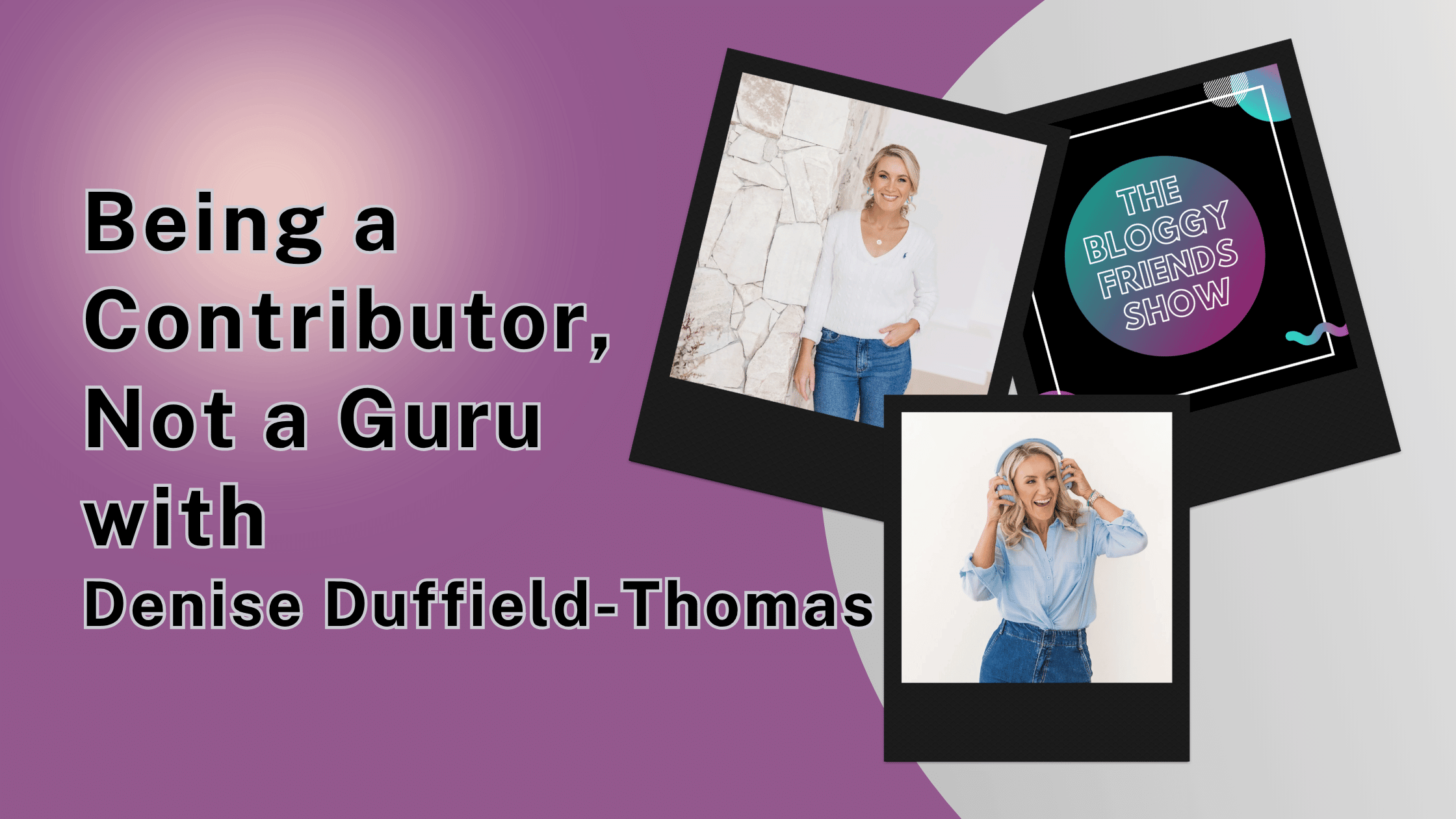
Denise Duffield-Thomas on money blocks, ballet, guest podcasting, and why you can be a contributor, not a guru. Hear the full chat.
Full disclosure: this post does contain affiliate links that earn me a commission should you choose to make a purchase at no additional cost to you. Thanks for supporting my creative work!
You don’t need to be a guru to start
Six years ago, I wrote one name at the top of my podcast bucket list: Denise Duffield-Thomas. This week, she’s my guest on the Bloggy Friends Show.
Watch it here:
Prefer to just listen and not watch? You can do that here:
I bought Get Rich, Lucky Bitch back in 2013 and joined her Money Boot Camp in 2017. Then in 2025, she said a line on her own podcast that changed my plans: be a contributor, not a guru. I didn’t need to be an expert to start talking. That one idea is the reason I run a fitness podcast today.
So we start there, then let the conversation go wherever it wants. Denise and I talk about:
Why your imperfect story is the one someone out there needs to hear
Her water park rule for beating shiny object syndrome: every slide ends in the same pool
How she handles being recognized, from keeping her kids offline to skipping speaking gigs in her own town
Why she does about 200 podcast interviews a year, and how she found the easy way to reach people
Ballet, tap, and stepping back onto the dance floor as a grown woman (plus her years inside an Olympic mascot suit)
Celebrating every milestone and saying “thank you, I received that” when someone pays you a compliment
What she wants next now that she’s checked off so many big goals
Stick around for the ghost story near the end. And yes, Denise says she’ll come back for round two.
Denise Duffield-Thomas teaches business owners how to get comfortable with money so they can charge what they’re worth and keep more of it. She’s the author of Lucky Bitch, Get Rich, Lucky Bitch, and Chill and Prosper, and she hosts the Chill and Prosper podcast.
Her signature program, Money Boot Camp, helps students work through the fears and old beliefs that keep their income stuck. Her books come out through Hay House, and her style is practical, funny, and low on hustle.
Denise calls herself an introvert. She’s an Australian who calls the country’s eastern seaboard home, along with her husband, Mark, and their three kids. Away from the business, she’s a dedicated adult dancer who takes ballet exams, performs in dance concerts, and sews costumes for fun.
Denise Duffield-Thomas on Money Blocks, Ballet, and Being a Contributor, Not a Gurushley
Why Denise has been on my bucket list for six years
00:00:19 Famous Ashley Grant: What’s up my bloggy friends? Famous Ashley Grant here and welcome to the show. So, Denise Duffield, Thomas, Denise Duffield, Thomas. Holy crap, you guys. That is the big person that I have been teasing y’all for a while that I finally got the opportunity to interview this woman has been on my bucket list as a podcaster since I started back in. Goodness. I started in twenty twenty. It was in April twenty twenty that the very first episode went live, and so she has been on my bucket list for six years. I was told whenever I started a podcast that I needed to write down my top people that I wanted to interview whenever I started interviewing folks, and she was at the top of the list. Like from the very beginning, nine years ago, I joined her money boot camp, and before that I had actually bought a book called get Rich, Lucky Bitch. I read it like it was a secret map, like a secret code. And I have been learning from Denise goodness since then. I mean, for more than a decade. And last year in her podcast, she said a sentence that honestly changed how I think about content. She said, be a contributor, not a guru. And when I heard it, I thought, wait a minute, what? I don’t I don’t have to be an expert to start. And that one line is why I have a fitness podcast today. And y’all, I’m not a fitness guru by any stretch. And yes, I’m sure you can hear it in my voice. I am super star struck. I was so excited to be interviewing her. She is the best selling author behind Chill and Prosper, and that’s also the name of her podcast. She wrote Lucky Bitch and get Rich, lucky bitch and I, I just freaking love this woman and I’m just so stoked to share this interview with you. And, uh, we go a little off topic. We’re not completely talking about blogging in this episode. We, we talk about ballet, we talk about fitness, we talk about all kinds of things. But y’all, I just let the conversation go where it was going to go because it was just that important to me. And I loved everything that we talked about. And I also love the fact that Denise said that she would come back as a guest. So I can’t wait to talk to her again. But for now, I hope you guys enjoy the show. Let’s get into it. Uh, yeah. So the first thing, though, that I have to say before we do anything is I have to thank you because back in March of twenty twenty five, you had an episode of Chill and Prosper where you said, um, be a contributor, not a guru. And when I tell you that unlocked something in me that I didn’t expect, it just it kind of blew my mind. Right. And, and, um, it’s kind of what started the fact that I’m now a fitness podcaster, which is so crazy because I’m not a fitness guru by any stretch of the imagination. I’m just a girl who was trying to, you know, tell my story and you gave me the courage. Like.
Be a contributor, not a guru
00:03:10 Denise Duffield-Thomas: I’m really happy about that.
00:03:12 Famous Ashley Grant: Yeah, I think.
00:03:12 Denise Duffield-Thomas: That’s so we’re not recording right now, but I think this is a good one to put on here.
00:03:16 Famous Ashley Grant: Oh, no. I’m actually already recording. Oh. Anything you say. Let’s go.
00:03:19 Denise Duffield-Thomas: No, this I think it’s really key because that’s actually what people love. People love hearing stories from all different, um, angles of each topic. But we think, oh no, I have to be the perfect of the perfect before I’m allowed to even whisper anything. And I’m like, there’s a lid for every pot. Someone needs to hear it exactly from you. The Ashley Grant style.
00:03:44 Famous Ashley Grant: Yeah.
00:03:44 Denise Duffield-Thomas: Otherwise they won’t hear it.
00:03:46 Famous Ashley Grant: It’s so true. And this guy on Reddit that I had never met before, he even commented, he’s like, you know, hey, I heard your podcast and I like the fact that you’re not a fitness influencer. He’s like, because too many people are polished and full of crap. And I’m like, he gets it. Which is funny because it’s not for men, but, you know.
00:04:04 Denise Duffield-Thomas: No, but like, it takes the pressure off because then you’re like, but I’m not trying to be anything. I’m not. And I think it helps with the imposter syndrome, but it’s also like, oh, I’m allowed to have a voice. I’m allowed to have an opinion. It doesn’t have to be, you know, the perfect one to contribute to the conversation.
Car casts, Periscope in a parking lot, and talking to yourself
00:04:20 Famous Ashley Grant: Yes. And I’ve actually quoted you several times about that because like, you know, I, I started the, the show from my car and that also became a, it became a thing because I work for, I don’t know if I told you this in the, in the interview or whatever, but I work for RSS dot com, the podcast hosting company. And, um, and so I was telling them about it and my marketing manager, he’s like, so you basically have a car cast and I’m like, oh my God, I never thought of that trademark.
00:04:45 Denise Duffield-Thomas: That.
00:04:46 Famous Ashley Grant: Yes, I totally wrote that down.
00:04:48 Denise Duffield-Thomas: Did you ever do, um, periscopes when Twitter.
00:04:52 Famous Ashley Grant: I did that, wasn’t it. The one that, like, disappeared after twenty four hours. Very similar to Snapchat.
00:04:57 Denise Duffield-Thomas: I can’t remember if they I don’t know if they disappeared, but I used to sit in my car when my kids were little because they’d they’d be asleep and I’d be in like a McDonald’s, um, parking lot trying to hide it because just in case any crunchy moms were like, you’re at McDonald’s. And I would just do like an hour long periscope every day. And it was just such good practice for now, when I have my own podcast, when I go into the studio and I do like twelve episodes in one day, but I’m like, you just got to start with what you’ve got. And even if no one’s listening at the start, it’s practice.
00:05:31 Famous Ashley Grant: Absolutely. And I love that because, you know, it’s, it’s really gotten me used to kind of talking to myself. And I, I’ve had, I’ve had this joke for a while now that if anyone sees me talking to myself, I’ll just say, look, I’m self-employed and it’s a staff meeting.
00:05:44 Denise Duffield-Thomas: It’s so true. Oh, it’s so funny when people will say, though, how do you like, how do you sit and do so many podcasts today? And I’m like, I’ve been training for this my whole life. Like, shut me up. Or when people say, what could you talk for an hour on? I’m like, let’s roll the dice. Let’s pick it so I could talk for an hour on anything.
00:06:01 Famous Ashley Grant: I can to. It’s so funny. And I used to get in trouble for, for talking in class. I always had the marks like it talks too much. And I’d get the demerits and the conduct cuts and all that thing. And whenever I started working in corporate, that was always my quarterly review is she talks too much and I’m like, now I get paid to do it.
00:06:17 Famous Ashley Grant: Now we get paid to do it. And who knew.
00:06:19 Denise Duffield-Thomas: That this would be a thing? So exciting.
Being an introvert with a big audience
00:06:21 Famous Ashley Grant: Yeah. So I’m going to give you a little bit of background. Um, so I joined Money Boot Camp in twenty seventeen and I was looking in my Amazon archives and I actually bought get Rich Lucky Bitch in April of twenty thirteen. And I’m just like, I’m going through this going like, oh my God, I have like really been stalking her for quite some time. What does that feel like to you to know that someone’s like, been listening to what you have to share for so long?
00:06:47 Denise Duffield-Thomas: Um, as an introvert, I, I don’t think about it.
00:06:52 Famous Ashley Grant: Yeah.
00:06:53 Denise Duffield-Thomas: I really don’t. And I think, um, I’ve never wanted attention from my business. And so I actually do struggle with that a little bit where, um, I don’t really love doing speaking gigs and stuff like that. So a lot of the work that I do, like when I do my own podcast, I’m just in a room talking to myself with the sound engineer next door. When I write my books, I’m doing that when I’m doing a lot of my videos, it’s just me in a room. So I, I can’t think about that sometimes. And I just have to trust that it will reach the right people. And yeah, I don’t know. I it’s just not my personality, I think to, um, seek out attention. Not that that’s a bad thing. I love my extrovert friends and I wish I had some of that a little bit because they can do speaking gigs for their, for their own enjoyment. Whereas for me, I’m like, you have to drag me out of the house to do it. So I have to be detached from it, honestly, and but I and I can receive it. And I go, oh, I know that helps people, but I can’t think about it too much. And I do a few little things like my team, they don’t pass on praise to me because if I believe that, then I also have to believe that someone who says like, you suck. Yeah, right. So I, I, I kind of have to be quite insular. I think for my personality.
00:08:12 Famous Ashley Grant: It’s interesting you say that because I remember shortly after I bought the book, um, I actually sent a message and I was just like, oh my God, this is amazing, blah, blah, blah. And I got a, an auto or a canned response back saying, you know, thank you so much. Uh, but we will not be sending this to Denise. But we appreciate that you, you know, supported her cause and I’m just like that.
00:08:29 Denise Duffield-Thomas: Oh my God.
00:08:30 Famous Ashley Grant: I.
00:08:30 Denise Duffield-Thomas: Don’t think that because.
00:08:31 Famous Ashley Grant: No, it’s not bad at all. What I think is so wonderful about that is your boundaries. You are so good with boundaries. You’re so good at like no fluff and no, no, no, like airy fairy like, even though you do subscribe to some of that. I love the fact that it’s always grounded in real, like life. That’s one of my favorite things about your content is when I listen to it, it doesn’t feel kind of like the fitness podcast. It doesn’t feel like you’re putting on fluff. You’re not, you’re not putting on the glam and all the all the junk. You’re just cutting through the BS and, and telling it like it is. And that’s, I mean, where, where did you get that in you to just kind of tell it like it is? Has it just always been ingrained in you?
00:09:11 Denise Duffield-Thomas: Yes.
Telling the truth and choosing your limits
00:09:12 Denise Duffield-Thomas: I think to having ADHD and having low inhibitions about sharing stuff, I think is probably something I’ve always had, but I’ve also always been that kid who was like, oh, I saw this on Oprah yesterday after school. Let me tell you about it. I read this book. Here’s the thing. Um, and I don’t know if that’s just being a Virgo of just like wanting to be helpful, wanting to help solve people’s problems and, and just being someone who’s just very open, like my mom, I think is probably like that too. So I grew up, you know, she would tell strangers anything, you know. And I I’m just that kind of person, too. And it’s funny you were talking about Sandy foster, because when we were hanging out two weeks ago, um, at this conference, I was telling her, like, just some really intimate random details. And I’m like, that’s just who I am. Like, and maybe it’s sometimes a bit TMI, but I feel like, um, I’ve given myself permission with that, with the contributor thing of going, I don’t have to pretend to be anything. I’m not. Yeah, just tell the truth. And you know, it’s the same with a couple of years ago, I released my tax returns because I was like, well, I’d make the money either way. So like, I’m just going to put them out there. Like, I don’t know, it just, it’s just very natural for me to tell people random stuff. I have to stop myself sometimes.
00:10:37 Famous Ashley Grant: It’s hard though, isn’t it? Because like, especially whenever you like, start feeling comfortable in something you’re talking about, it’s, it’s so difficult to, to kind of figure out like, oh, where’s where’s the spot where I, I went too far.
00:10:49 Denise Duffield-Thomas: Oh, absolutely. I had to almost give myself a bit of scope, a scope, um, parameters a little bit. And so not to say there’s anything off limits. And definitely when I’m on a podcast, people go, is there anything you don’t want to talk about? I go, no, but there’s I realized that there’s useful and not so useful things to talk about in my work. Yeah. And you can, you can go a bit too far. And so I kind of go, okay, I’m gonna stay within these parameters. And for me, that might be like I go, okay, money blocks, you know, money mindset pricing. I’m not going to talk about health and fitness or I’m not going to talk about relationships or I’m not going to talk about sex. I could talk about any of those within the context of money, but I needed to have a bit more parameters of myself because my first website was literally like, I can help you with anything. And I had all these different tabs, like a million different things because I’m like, I could, but just because you can doesn’t mean you should.
Too many interests? Find your umbrella
00:11:48 Famous Ashley Grant: Right? Yeah, yeah. That’s actually something I, I used to get fussed at a lot for I, I started my business in two thousand and seven, didn’t get serious till like twenty fourteen. But, uh, but yeah, one of the things that was always said to me is like, you’re always doing so many things. What do you actually do? And I’m like, how do you answer that? I’m a multi-passionate person. Like I, I loved when Marie Forleo came out saying that because I’m like, yeah, that’s what I am. But now it’s like, okay, fine. I guess you really do have to hone in and figure out, you know, what you actually want to be known for.
00:12:16 Denise Duffield-Thomas: Yes and no. And I think there’s, there’s nuance to this because sometimes when people are multi-passionate, it’s like this agony of thinking it must be my thing out there. Yeah. Right. And so it’s this never ending quest, that hungry ghost thing of going, I need to find my thing. But sometimes your thing is being a creative person, being a, um, not even a jack of all trades, but it’s like there is an umbrella sometimes. And I didn’t realize this for a long time, but actually when I was in a job, my boss told me this and I was like, oh my God. So I was saying, um, I wanted to invent bag hooks. I’ve probably talked about this one of my books where I’d go to go to a restroom and there’d be nowhere to hang your thing. And I was like, I’m going to do like a hook thing. And I was like, talking about it. And he was like, no, someone’s already invented that. And I was like, well, what am I gonna do with my life now? That was my one idea. And he was like, no, you’re a storyteller. Yeah, like you’re a storyteller. And I was like, oh, that’s. It was just like a light bulb moment. It’s not like that. I went, oh, I know what I’m going to do. But it kind of gave me permission of like, no, there, there are umbrella things. And for a lot of creatives, it’s like, I’m a problem solver. I’m a creative genius. And then I help people solve problems in lots of different ways. But I don’t have to take each one of those problems home and make it my business forever. So I kind of think of that. As for some people, they’re an ideal doula or a doula where it’s like, you wouldn’t expect your midwife to come home with you. Her job is done, right. But, but sometimes when we think of all those ideas, they’re like haunting us and they’re like, why don’t you love us anymore? And you go, I’m sorry, I thought of something else. But it’s like it’s because I’m a creative person. And so to some people it is. And helping others to initiate, it’s helping to light the fire for people or to motivate people not to finish everything. And I think there’s, there’s a real pain in, in that sometimes of like, what do you want to be when you grow up? And we think it has to be a job or it has to be a thing, you know.
00:14:30 Famous Ashley Grant: And no, it doesn’t. Yeah. And I like the fact that what you’ve done by looking at everything through the lens of money is you’re giving yourself permission to explore every single thing that there is in this world, but because you have it through a single lens. It all has boundaries on it. And that that’s one of the things I actually really like. Yeah.
00:14:48 Denise Duffield-Thomas: And that’s really helped me.
The water park rule: all roads lead to one program
00:14:50 Famous Ashley Grant: Yeah.
00:14:50 Denise Duffield-Thomas: I can imagine so much. It’s helped me too. Because people will say, don’t you get bored with your business? Or how do you not? You know, procrastinate or shiny objects. And I’m like, I do, but I think of it as going to a water park where there’s all these different slides, but everyone ends up in the same pool. And I have to have that discipline in myself. Of all roads lead to money boot camp. Yeah. So I can be super creative in all of those things, but I’m not creating new programs. I’m creating new water slides that all lead to the same program. And it just has helped me in my brain to not punish myself when I’m feeling antsy or creative. I just go leave the back end alone, experiment in the front end, right? Yes, that’s, that’s my sex life philosophy as Well, leave the backhand alone, and I. It’s the only discipline that I have of just going. Don’t break your business because I see so many people do the other way. Right. They’re they’re going, I’ll create this program and this thing. And there’s this thing because I’m bored. And it’s like, you can, you can scratch that itch of boredom in a much more productive way for your money, right? Just create new marketing channels, create a new optin, create a new book, create a new podcast episode about it. Because most of the time the itch actually does go if you don’t enable it, right? And we enable it, we enable it sometimes by I’ll buy the domain name, I’ll tell people about it. I’ll do the thing. You obligate yourself to do it, but you could do all of that in a better way.
Stepping into a personal brand and “more of this, please, universe”
00:16:24 Famous Ashley Grant: Absolutely. I agree a thousand percent. And it’s, it’s kind of funny because most recently, because of the fitness podcast, like I’ve been talking to, to my husband and, and to, you know, different people about the fact that I’m finally trying to figure out my personal brand because I’ve been a ghostwriter for well over a decade, and I kind of want to step into the spotlight because I’m way too vain to keep my mouth shut. And so yes. And I don’t know, I guess it’s like the, the nurture in me wants to give to everybody because, you know, my, my, my archetypes are nurturer, connector accumulator and, but at the same time, it’s like I do have a little bit of celebrity in me that wants to just, I mean, come on, I have the moniker famous Ashley Grant for a reason. And, um, and, and over the last year and a half, I’ve really stepped into becoming the more movement girl. And it’s, it’s so funny to me because again, I never in a million years thought I was going to be a fitness person, fitness podcaster, none of that. But, um, but whenever I finally gave myself permission to explore that, I’m like, well, you can look at everything through the lens of fitness because movement is not just about, you know, weight loss and things like that. It’s about so much more than that. And so I don’t know, I just so my thing has always been since I got serious about this is all roads lead to, you know, Dot com. So I like the that that philosophy of all roads lead to boot camp. And it’s so funny just hearing you say all these things that I’ve heard you say for years. And it’s actually something you’ve said before where you’re like, I may tell you the same thing over and over again, but finally it’s going to click and oh.
00:17:50 Denise Duffield-Thomas: Absolutely. But also, I can I just say I love, um, the more movement because it’s not about being perfect, everyone can just do it a little bit more, right? And like any that counts a little bit more than yesterday, that counts. I love it, by the way. I think it’s, it’s really, um, it’s got juice to it.
00:18:09 Famous Ashley Grant: Yeah. And well, the interesting thing is my, my company, my first company was called more than photographs and my mom goes, well, why did you name it more than photographs? And I said, because I do more than photographs. I, I, I wasn’t very clever, but it worked.
00:18:22 Denise Duffield-Thomas: No, but there’s a theme there, right? Of like getting more out of your life and. Yeah, yeah, I like more money.
00:18:28 Famous Ashley Grant: Please.
00:18:29 Denise Duffield-Thomas: More money. Exactly. I more of this please universe. I think that’s a really good one. Like if something, um, little happens, like I find a coin in the street, which happens to me a lot, by the way. Um, I literally pick it up and I go more of this please universe. If I have a beautiful Sunday where I feel content and like more of this, please universe, it’s just such a great way to embed in those good feelings and also to be like this end and even more, please.
00:18:57 Famous Ashley Grant: Yes, absolutely. For some reason, you just made me think of that Ariana Grande song. Yes. And anyway, but moving on. So.
00:19:06 Denise Duffield-Thomas: Um, Ted Lasso was talking about that this week. Did you watch the most recent episode of Ted Lasso?
00:19:11 Famous Ashley Grant: I’ve actually seen an episode of Ted Lasso.
00:19:14 Denise Duffield-Thomas: Oh, it’s really good. But they talk about that thing in, um, in like sketch comedy where it’s. Yes. And, and one of the, um, women in it, she was reading a book about saying yes, more. So she was saying yes. And they were like, you don’t have to just say yes. You can say yes and as well and still set boundaries. It’s a really good episode. It’s worth looking into.
00:19:35 Famous Ashley Grant: I might have to just watch it just for that. Absolutely. Well, I kind of want to pull you back. Even though you said you didn’t want to talk about health and fitness because it’s kind of related to money. I do want to bring up ballet. Yes.
Ballet, tap, and getting back to the thing you loved as a kid
00:19:46 Denise Duffield-Thomas: Let’s talk about it. Yes.
00:19:47 Famous Ashley Grant: Yes. So one of the things you had said was that not everything has to be a business. You can you’re allowed to have a hobby. When did it come to you that you’re just like, okay, I gotta get back in ballet? When did that happen for you?
00:20:01 Denise Duffield-Thomas: Okay. So when I was a kid, um, people would say, what do you want to do when you grow up? And I would say, I want to be a dancer or I want to be a business lady, but I’ll probably be a business lady because you can’t make money out of being a dancer. Right. I don’t even know where that came from for me because it’s not like my mom said that, but it was just I think that’s just such a part of our culture, right? Of, of like, you can’t make money from being a creative or you have to make money in a serious way. So I always loved business anyway, but I was obsessed with dancing as a kid. It wasn’t even so much ballet. I did tap and jazz um as well. But what my dance teacher was really good at is getting us performing anywhere, anywhere on the Central Coast where I grew up, we would be there, so it would be like, Mick, happy day. Do you guys do that? America? Where? Okay, so it’s called Mchappy day, but it’s like where McDonald’s around the country will have like a little fair kind of thing.
00:21:01 Famous Ashley Grant: Okay.
00:21:01 Denise Duffield-Thomas: And it will be like they’ll raise money for charity. So we would always perform there. Like we would perform in nursing homes every single weekend. We weren’t good, by the way, for the first couple of years. But what that really gave me was, um, resilience because we would turn up somewhere and they’d go, hey, we don’t have a stage. You have to tap on this flatbed truck that’s going to move or, um, yeah, you’re going to be tap dancing on grass today. Or, um, we would be on a slippery floor and half of us would fall over or whatever it was. And I think this is such good parallels to business, right? Of that numbers game of getting through like your first hundred rejections or your first whatever. It’s that that resilience. So it was just a really big part of my life, and especially since I had a very chaotic upbringing, dance was a real like, um, I feel like my dance teacher kind of raised me kind of thing. Right. So, um, but I was very clear. I was like, I don’t have the body to be a dancer. It’s just not my, it’s not in my future to do this professionally. But when I was sixteen, I auditioned for, um, a company that did shows all around Australia, like children’s shows. Um, and it was, there were Looney Tunes shows like Bugs Bunny kind of things. So every school holidays it would be in a shopping centre or Westfield shopping centre. And so I worked for that company, um, from sixteen to like twenty two. And they also got the contract to do the Olympic mascots for the Sydney Olympic Games. So I was one of the mascots inside the suit. Right. For years. So it was just such a part of my life that I always compartmentalized it. And I was like, I am a performer, but I’m I have to do this instead. Like, not that I have to, but that’s how you make money. So I always just felt like a real creative split for me. And I never stopped thinking about dancing. And as soon as my kids were two and a half where, like, they could join tiny tutus, I was like, dance, dance, dance. And then I’d be like, I’d just be sad going into like the ballet store, the dance store. And I’d just be like, oh, like looking at the shiny tap shoes and be like, ah! And I’d try and do adults classes here, here, there, and everywhere. It’s just not the same. So a couple of years ago, I found an adult dance studio in Newcastle and it’s dedicated for adults. And I think this is really important because it’s um, it’s just for adults. It’s not an afterthought and it feels like you belong. Right? And it’s it’s a serious thing. So now I do, I do ballet exams, I do tap classes, I do performances, I do, I just had a concert, I make costumes and I feel like I’m home back in that environment. Right? It’s very familiar to me and I feel like I’ve come full circle. I’m like, I am a dancer and I am a business lady. And those things can coexist. But also, I think too, there was a sense a lot of women who then go, well, it’s not my time anymore. It’s all about my kids. And I’m sure this is true for fitness as well, right? It’s like, I don’t have time to work out or it’s, it’s just not my time, I think is a big thing, right? And so I love now that on a Saturday, I drop my kids at their ballet, I go to my ballet. And sometimes I do have to miss things for them because I’m like, I’ve got a show. And like, I almost didn’t get I almost didn’t get my kids to come to my dance concert because they had a full day of sport and, um, birthday parties and all that stuff. And I was thinking they’ll be too tired. And then I went, but I go to all of their stuff. Yes. And so yeah, I go to, I sit through all of their soccer things and whatever. And I think it’s not about the it’s not about the dancing so much, but it’s about a reclamation of like, my hobbies and interests are important too, and I am, I am worth that. And I’ve never enjoyed exercise in any other context except for dance. And so it’s just been like, I’m allowed to do things that I love. Um, the thing about turning it into a hobby is, uh, sorry, a business is tricky because, um, because I make costumes a lot for our dance school too. Uh, there’s been times where people are like, oh, so are you going to do this for a job, you know, or can you do. Oh, can you do for our theater? And I’m like, no, no, no, no, no, no, I don’t want to have clients in that way. But I do have to also, I’ve noticed there’s been a few times where I’m like, oh, that’s fine, I’ll just pay for that. And so I’m like, oh, my money blocks are coming into that space as well where I’m like, no, you still have to have boundaries and you still have to like, you know, but a few times, um, my husband will come home and he’ll be like, what are you working on? And I’m like, oh, it’s, it’s a costume for a dance that doesn’t exist yet. It’s a great like creative outlet or you’ll go, what’s that for? And I go, it’s for the horrors. And he’s like, what? And I go, it’s to combat the horrors of the world. That’s why I’m making this tutu that no one asked me to make.
00:26:11 Famous Ashley Grant: I think it’s really good, though, and I think it’s really healthy because, well, first of all, it’s cheaper than therapy and.
00:26:19 Denise Duffield-Thomas: It’s due to the net. It could be meth, let’s put it that way. Yes.
00:26:23 Famous Ashley Grant: I can honestly say that was not on my bingo card for you to say today. That was hilarious. Um, but but yeah, I think that, you know, one of the beautiful things about hobbies, especially ones that involve movement, is it helps you to think of ideas like I get some of my best business ideas while I’m working out. And, um, it’s so funny hearing you talk about dance because like, that’s one of the reasons I’m obsessed with Zumba is as a kid, I, I loved dance as well and I would have kept dancing, but Reader’s Digest version, I encountered some bullies. So my mom pulled me out of dance and put me into taekwondo. But, uh, but yeah, as soon as I was starting to work out, I’m like, okay, I gotta find my thing. And it’s definitely not lifting weights, so, but, uh, but yeah, just oh God, dance is so fun. And I love so fun.
Hobbies don’t have an expiration date
00:27:11 Denise Duffield-Thomas: And I think too, what’s been fascinating about going back into it is all the different experiences around, um, dance and people’s relationship to their bodies. So we’ll have people who, um, weren’t able to dance as a kid because of money. And so that reclamation for them is like, I’m allowed to spend money on this now as a grown up. There’ll be people who, um, one of my friends, uh, who goes to dancing at fifteen. Her parents said, look, we don’t want you to be a professional dancer. And so she became an ER doctor. And so she said, er doctor. And for her, you know, it’s like she’s an amazing dancer. Right. But she stopped at fifteen because she thought, well if I can’t do this for a living I’ll stop. We have people who have had so much body trauma from ballet teachers that they’ve had to do therapy before they can even come back into class. There’ll be people who it takes them a year to even put on a leotard. Um, it’s just, it’s fascinating the different experiences and also the different, um, uh, challenges that people will have coming into it to where people will say, oh, I’m not going to go to the photo shoot because I’m too old, or I don’t want to be on stage because I’m too old. And I’m like, but next year you’re only going to be older. Like, why wouldn’t you do it now? Like, um, and the tap class I go to, I’m, I probably would be the youngest in the class by like twenty years, right? And they’re all amazing tappers. And one of them, um, she said to one of the others, she goes, look at Denise’s lovely young back. And I was like, what? And I just made I was like, oh my God. I had got chills because she she goes, enjoy it. Enjoy your youth. And here’s me going, I’m forty seven years old. What am I doing? You know, dancing all the time. And my, my daughter is always like mom. And I’m like, oh my God, I can be doing this for another twenty, thirty years. And I’ll look back and go, man, my knees were so good at forty seven. Um, and so it’s like, why do we think that we have an expiration date on our hobbies, especially when it comes, I think for women, like no one has ever said to my husband, Mark, when he goes to golfing, like, oh, you know, are you going to be a golfer now?
00:29:26 Famous Ashley Grant: Yeah.
00:29:27 Denise Duffield-Thomas: Or like, he plays football and, oh, well, are you going to be a professional football player? And it’s like, no. Whereas I think a lot of people felt like, oh, if I’m not going to be a professional, I have to give this up. And, um, I was at a dance competition with my youngest, so she’s eight. I’ve got eight, eight, eight, ten and twelve. But the, the eight and the twelve year old dance too. And we’re at a dance competition. And I was just, I don’t know, I must have just been tapping or something as I do, just like la la la. And one of them said, did you used to dance? And I said, no, I dance now. And she goes, I didn’t know like grannies. This is what she said. I didn’t know grannies are allowed to dance. But you could see they were just like, what? And I’m like, I dance now all the time. And it blew their mind. But I’m like, I want them to see this. If you love something, you can do it for your whole life. It doesn’t have to be all or nothing. It doesn’t have to be a career. It can be. You do it because of joy. But there are some things I think that are especially for women. It’s like, no, I have to choose like, whoa, you don’t. And there’s so many different avenues now to do it. Like, even like pickleball. I love that that’s come in because it’s like I’ve never been able to play tennis, but I’m like, pickleball looks like it would be doable.
00:30:50 Famous Ashley Grant: It looks like it, but I, oh, I tried it. And the funny thing about the fact that I tried it is I actually do some editing for pickleball dot com and I, I am not a pickleball girly. Give me some dance shoes any day, but you can keep your balls, honey. I’m I’m good.
00:31:08 Denise Duffield-Thomas: I know, um, my twelve year old who, as I said, she dances, she just, uh, got on point this year for the first time, but she doesn’t want to do competitions because she also wants to do tennis on Saturdays. And I’m always like you an outdoor sport. Yuck. I’m like, oh, I’m an indoor cat. I’m always like, don’t you want to? Why do you want to do that? Just do more dance. That’s so funny. It just grosses me out. I’m like, yeah. Yeah. Um, but yeah.
Showing your kids that your time matters too
00:31:32 Famous Ashley Grant: That’s just wild. I love the fact that you said that you were debating whether or not to bring your kids to your recitals, but then you made them go anyway for two reasons. Number one, yes, they should watch mommy because come on, you do go to all their stuff. But also, I love the fact that you’re teaching them that as they get older, it’s okay to take time for yourself. Like that is just.
00:31:52 Denise Duffield-Thomas: Yeah.
00:31:53 Famous Ashley Grant: It’s so important because like you said, we’re, we’re taught too much to not do something productive means we’re not actually making money. And I disagree with that completely.
00:32:03 Denise Duffield-Thomas: Oh, you know what? I actually there was something another layer to that last year, um, for our concert, a few of my friends were like, we really want to come see you dance. And I just kept on going. Yeah. And they’d be like, when are the tickets come out? I’d be like, nah. And then a few of them came and I was just like, you have to promise me. You have to be out of my eyeline. You have to sit right at the back. You cannot you cannot even talk about it afterwards. Do not even talk to me about it. Right. What they got out of the concert was so different to what I expected. All of them. And they’re all women my age were just like, oh, my God, that was so life affirming. And so that’s why this year I had no hesitation in inviting them. Even my babysitter, my long term babysitter, who used to be my full time nanny. She came as well to help with the kids. And because I knew it wasn’t about me and they were there, keep their eyes out for every single performance because they’d be like, um, oh my God. I could see that lady’s hand shaking and it just made me so proud of her. And then the next one was like, oh my God, I’ve never seen like a woman with tattoos all over her body wearing a tutu. And it’s so healing for everyone in the audience to see that, right? And my dance teacher doesn’t say, oh, all the tall people at the back. So all my tall friends were going, oh my God, the tall girl was in the front row for some of it. And it was so life affirming for them. And it was like seeing different body shapes. And so I was like, oh, I know that this is not about me. And that’s such a beautiful gift to show yourself, enjoying what you do and to be in your body and to role model that to everyone, I think is just so powerful.
Does personal content bring people into your business?
00:33:44 Famous Ashley Grant: I’m very curious because I’ve noticed, you know, you’ve been posting a lot more about that on social media. You’ve been sharing, you know, as you’re thrifting to get the, the costume stuff, which I love, by the way, it’s just amazing content. Does that content that has nothing to do with your business, do you feel like it’s drawing people into money boot camp?
00:34:03 Denise Duffield-Thomas: Well, I struggle with it a little bit because I go, I mean, I go to dancing every second day, right? So I, I feel like I just want to start a whole separate account just for dancing. And then my friends like, no, no, it’s really inspiring. I’ll go. Is it okay? All right. Cool. Um, so I, I feel like I’m probably holding back to my detriment on that, you know? Um, so this, uh, conference I was at, uh, two weeks ago run by my friend Tash Corbin, her big, um, keynote speaker, uh, pulled out. And so I was like, yeah, totally. I’ll speak. But I said, I actually don’t want to talk about business. I want to show all of the photos from my dance concert and not just photos of me. I was like, this is my friend Chrissy. She’s deaf and look how amazing she is. And this is my friend Alita. Up until, you know, two days before she was wearing a knee brace for this whole thing. And this all six months in the lead up to the concert, she’s had all these health challenges. And this is my friend, um, uh, Alyssa. She’s a school teacher, and this is my friend Kate, and she’s an ER doctor. And I was like, crying on each one because I was like, I’m so proud of my friends. And so I’m like, I know I should share stuff like that more often, but I do, I get really shy about it and I’m like, oh, I’m like, oh no, I can’t. Where do you think that stems from? Um, some of it is, I think introversion as well of just like I want things that are for me.
00:35:34 Famous Ashley Grant: Okay.
00:35:34 Denise Duffield-Thomas: And I feel like, um, I was talking to one of the girls afterwards actually, because I said the, one of the reasons why I don’t do a lot of public speaking is because when I do share stories like that, it feels so personal. But if I had to do that a million times, it would start to feel like I was, I don’t know, forcing that because I feel like, oh, it’s so personal. And she was like, I used to feel the same way. And then she was like, um, you know, my sister died. And when I speak about her on stage, I feel like I’m really honoring her. And I’m like, I know that really helps people to hear me talk about that. And it reminded me of this lady, um, in Australia. This teenage girl died from ecstasy and she was the same age as me. Her mum spent the next five years of her life going to oh, it makes me cry thinking about going to every high school in Australia talking about it. And it made such an impact on me. And I thought, wow, that like, it was a real gift for that woman to share her experience because I know it definitely impacted me a lot. And so that made me change that as well of going there is a real gift in sharing things. And I discounted that for a while, and I forget how many people have seen the dancing stuff and gone, oh, maybe I need to get back into a hobby, or maybe I need to do this thing. I just, I feel like for me, I’m like, I’m like, oh, it’s mine. So I’ve got to find the line of that.
00:36:59 Famous Ashley Grant: I think I definitely get that because I mean, you know, especially as content creators, it’s, it’s very difficult to figure out like, what is mine versus what is something I share with the world, I can’t imagine. Especially since, you know, you have a much larger platform than I do. I can only imagine some of the people that reach out to you and how if you constantly, constantly feel like you’re giving of yourself, you’re like, well, what’s left for just me?
Getting recognized, protecting your privacy, and the fame fork in the road
00:37:23 Denise Duffield-Thomas: Yeah, it can feel a little bit that that way because you know that everything is content. Yeah. Right. Um, I think there was a point where I did feel a little bit not burdened by it, but again, being an introvert, being known by people, it can be a little bit jarring, to be honest. And there’s been a couple of experiences for me where I’ve been recognized in an out of context way. And I realized too, for me, I think being a performer, um, you know, putting on makeup, putting on a costume has always been a really great way for me to, uh, shield that, you know, and so even when I do speaking gigs, like I’ll get my hair and makeup done. I put on a costume in a way, not because it’s fake, because it just helps me with that confidence. So then being recognized out of context is very it’s very jarring. And I’ll tell you the two experiences that happened. One, I was getting on a plane, um, and the stewardess, she goes, it’s you. And I was like, oh my God. And so for the whole flight, I felt so self-conscious. And I was like sitting there just like going, how would Denise Duffield Thomas sit and read her book? And I’m like, I can’t like, pick my nose, scratch my bum, like, and it made me it was like, oh my God, being famous would be. So if everybody knew who you were, it’d be so, um, I don’t know, vulnerable or something. And then the other time I was at Disney, Disney, Disneyland, Hong Kong. Oh, wow. Someone was like, oh my God, it’s Steve. And I was like, Holy shit, how weird. And I just was like, oh, don’t perceive me. Because I always think, how do people know who I am if I’m not like, wearing my costume? Yeah, I’m so weird. I’m like, how do you recognize me? So there’s been a few experiences. Like one time someone at an airport recognized my kid. That’s when I stopped putting my kids online. So I do try and be smart about it. I’ve never had any really bad experiences. I have had someone come to my house, but she was nice about it. She wasn’t a stalker, but it it just made me go, oh, I have to be mindful in today’s world about, um, just you have to be careful. I think, you know, and, um, it can happen that some people get stalkers or some people get, you know, weird relationship things. And I’ve got kids that I have to think about in that way. So a couple of boundaries I’ve got around that I don’t do any work in my town, so I don’t do any speaking gigs at all. Um, and I try and keep my town just like my place and even same with dancing. There’s a couple of people at dancing who are were like, I’ve listened to your podcast and I’m like, no, that’s not here. That’s not this space. You know, like, I am, I am a dancer here. And I like that people are, I have more people in my world now who see me from that context, not from like my podcast or my books. Um, and I, I probably thought about two years ago, I felt this energetic fork in the road. I was like, how famous do I want to be? Because I, and I can say this from not a place of ego, but I was like, I could have a show, I could have a, I could be on TV. And I don’t know if that’s something that is in a different lifetime or if it’s later in the future for me. But I really felt that fork in the road moment and I was like, no, that’s not for me right now.
00:40:47 Famous Ashley Grant: Yeah.
00:40:47 Denise Duffield-Thomas: Um, yeah, I don’t know. It’s a, it’s a strange experience because. You want more impact, obviously, but and you want to help a lot more people. But I’ve always struggled with that from a, Uh, yeah, introversion, I think.
Why guest podcasting works so well
00:41:05 Famous Ashley Grant: I think it’s also a perception thing. Yeah, it definitely does. Yeah. I think it’s also a protection thing because, I mean, you know, we we see all the time, you know, Reddit threads that pop up that are simply snarky ones. Like, I mean, I, I saw one for a YouTuber that I barely even knew and it was like that person’s name stark. And it was literally just a page to make fun of that person. And I’m just like, what a weird time we’re living in that there can be an entire subreddit about someone. So I mean, I, I, I completely understand not wanting to, to have anything happen in your own town, but I also love the fact that you’ve done so much in podcasting, like doing guest podcasting, I think is one of the most brilliant moves you made because I, you know, as I’m researching for this, even like I’m finding all these amazing quotes that you said. And, and of course, I’m not even going through any of them right now because I’d rather just hear what you have to say while we’re talking. But, um, but yeah, just like finding all the stuff, not only was it backlink juice that, you know, got to your website, but just the wide variety of all the things you talked about. How did podcasting become the thing that like? I mean, I know part of it was probably because you didn’t want to go and do speaking gigs, but how did, how did guest podcasting become such a thing for you? I’m very curious about that.
00:42:18 Denise Duffield-Thomas: Um, I think, yeah, a combination of a lot of things. One, you know, I, I didn’t want to travel. Um, and I love talking and I love not having to prepare heaps of stuff. So, um, yeah, I, I would say most years I do about two hundred interviews a year. Um, at the moment I find. And so you’re my fourth for today. So once a week I open up my calendar and I’ll do between three and five. And I did find there was a point where I was like, oh, I think five is too many for me now. I don’t think I can do five in one day because I start to forget what I’ve spoken about. I do, and I don’t know if it’s just because perimenopause stuff. I’m like, have I already told this story? What’s happening? What am I saying? Um, but I love the fact that, um, I can reach more people, but I can just, again, just having a conversation with somebody is just magic. Like that’s what an amazing opportunity to be able to do that. Um, so it’s just always been easy. And I think that’s the key to a lot of business success is find the ease for you. I couldn’t sit down and write a five hundred word article every day. Writing is just so hard for me. But I can sit and talk for five hours. Yeah. And that will have a huge impact. Um, and I, I’m kind of detached a little bit now. Um, I don’t go on really brand new podcasts and the only reason I do is because I know what entrepreneurs are like and they’ll be like, I’m going to start a podcast. And then I’ve been on heaps of new ones and they, they never even upload them. Yeah. I’m like, that was not a good use of my time. So I sometimes I’m like, I have to be a little bit thinking of like, okay, um, but I’m, I’m so detached. I’m just like, whoever listens to this and it makes an impact. Great. I’m, I’m not one of those people who are like, oh, I’ve got an agenda for every podcast and I’m going to send you to a link and it’s going to put you into a, into a funnel. Mark. Literally, my husband, Mark, he goes, we’ve got a challenge coming up. Here are some points that you can talk about in today’s podcast. I was like, okay, we’re gonna look at that. I’m like, whatever, because that’s just not my style. So I think it’s been such a great, it’s just been easy for me and it’s been fun. And I like, I like it, but I do have to still have those boundaries of going. I couldn’t do it every day. So I do it on Thursdays and I do it from seven till, what is it, eleven. And then I go to the movies because that’s enough talking for one day. Um, and I don’t on when I have my boot camp. Cool days, I can’t. No, nothing gets scheduled in there, so it’s usually three to four weeks out of the month. I’ll do three to five.
The low-lift way to reach more people
00:45:07 Famous Ashley Grant: I love that. And you know, my favorite thing about it is it seems like for you, it’s like a low lift way to get out to more people. And that’s been the thing that I have been saying literally since the beginning of this year, is I want the lowest lift way to make as much money as possible and reach as many people as possible, because I’m tired. Yes, we’re all good.
00:45:28 Denise Duffield-Thomas: We’re all so tired. And also there’s so much noise, right? And so just do what you can do, my God, just do whatever you can do, but do something. Yeah. You know, just do something. And, um, I think too, it’s a really good way to, I don’t know, start to articulate your thoughts and your story. And I often also re record them as well on my side because then I’m like, great, I can just put that through a transcriber thing. And then that’s my emails written for the month.
00:46:00 Famous Ashley Grant: I love that that is like, I’m still learning from you the keyless lifestyle and all that stuff because I’m, I’m rereading Chill and Prosper right now because of course I had to since I was going to be interviewing you. And it’s so funny because I’m like, on the one hand, like, like I mentioned earlier, I’ve heard all this before, but yet I’m still finding golden nuggets that I’m just like, oh my God, brilliant.
00:46:24 Denise Duffield-Thomas: That’s good.
00:46:25 Famous Ashley Grant: Well, do you find yourself doing that with people too? Like, like people that you consume content of? Do you catch yourself going like, oh my God, they probably said that before, but now I get it. I’m curious.
Repetition, fear, and just showing up
00:46:35 Denise Duffield-Thomas: Oh, definitely. Definitely. But also, sometimes you hear it in a different phase of your life or, you know, I don’t know. I do think repetition is, is really key for stuff. And that’s why I it’s that contribution, not a guru thing, right? Where I’m like, I don’t have to come up with new stuff all the time. Like it’s okay.
00:46:55 Famous Ashley Grant: Yeah.
00:46:55 Denise Duffield-Thomas: Um, yeah.
00:46:57 Famous Ashley Grant: I like the fact that you’ve often said that, um, business isn’t hard. It’s just a matter of, like, actually showing up and selling the thing.
00:47:04 Denise Duffield-Thomas: It’s exactly. It’s really not that complicated. You know, I think sometimes we get caught up in the how to’s and people go, I don’t know how to do that thing. And I’m like, you could figure that out in like five minutes. Like you’re just scared. And that’s really, really normal. Um, because especially now you can Google how to do anything, but nothing is beyond us, but it’s just we just get scared and we, we worry that people are going to judge us and we come up with all the excuses of, okay, well, maybe when I’ve lost weight or maybe when, um, Mercury is out of retrograde, or maybe when I’m less tired and, you know, you’ve been following me for a long time, so you have seen me pregnant, you’ve seen me tired, you’ve seen me at probably lots of different weights. Um, you’ve seen me where I’ve probably wasn’t feeling that great, but I have shown up all the time. Yeah. And I just want to be that.
00:47:59 Famous Ashley Grant: You.
00:47:59 Denise Duffield-Thomas: Have.
Denise’s proudest moment (it isn’t a business win)
00:48:01 Famous Ashley Grant: The fact that you have is like, you’re giving permission for us to all be our own version of what a wealthy woman looks like. And I love that exercise of just stand here and say, you know, I’m very wealthy. Like this is what a wealthy woman looks like. And so I’m curious, in all your years of business, because you’ve been in the game a long time, what would you say is like the most magical moment you’ve had of something that you’ve manifested in your business that you did not think was possible?
00:48:28 Denise Duffield-Thomas: Oh, ah, that’s a really tricky one. Okay, so I’m a ruler in money archetypes. So rulers are very dismissive of accomplishments, okay? Because whereas like, oh, whatever, what’s the next one? And I, I find I’ve done that a few times where people go, oh, congratulations on, you know, your book or whatever. And I’m like, oh, Oh. Yeah, I guess I did that. Like, what’s the next thing? So that’s a really, honestly quite tricky thing to answer. I’ll tell you something. This non-business. Yeah. When I like and I really did feel it when I, um, wanted to start doing work on point again. So, you know, when you’re wearing pointe shoes, you have to do an assessment these days in the nineties, you just found a pair of pointe shoes in the garbage bin and just put them on like there was no, there was no testing. Now you have to go to a physio and get cleared to do it. And I felt so when I passed my point assessment, I was just like, this feels so good. Like I was so proud of myself. Um, and it was because, you know, I worked towards something and I, I achieved, I achieved it and I feel like I haven’t had that experience in business for a while, because I think I’ve probably just been doing that ruler thing of like, it’s not enough or do more or whatever. So I think we can, we can create that presence In our business, and I want to bring that in and just go because I was like, so chuffed. I was like, I’m so proud of myself. Yeah. Like, I don’t do that in business enough to go. I’m so proud of myself. I’ve just been very dismissive, I think. So it was I think that was a really big learning for me to, to bring that more into my business instead of, I don’t know, sort of just thinking, oh yeah.
Celebrate your milestones now
00:50:13 Famous Ashley Grant: I feel that in such a deep way because it’s always that constant, like, well, yeah, okay, fine. I got a thousand, you know, followers, but I need ten thousand or like, oh, I finally made a thousand dollars, but I need ten thousand. So it’s, it’s interesting you say that because that’s why when I started the fitness podcast, I was so intentional about, I am going to celebrate every single milestone. Like, I mean, I was even I, I’m to the borderline obnoxious about it at this point because I had, I don’t know why I really don’t, but all of a sudden in the past thirty days, I got like two thousand downloads. I don’t know what happened. I’ll take it. But like I’ve been sharing, I’ve been sharing the milestone cards and someone today said to me, they’re like, didn’t you just share one two days ago? And I’m like, yes, and I’m gonna do it again.
00:50:58 Denise Duffield-Thomas: I, well, I love that because I think it is embedding those things in as well. Um, but also it’s like, I think it’s really cool to acknowledge people as well. You know, when someone goes, oh, I’ve only got, you know, one hundred people on my newsletter list. And I’m like, if you had one hundred people in your lounge room, that would be a lot.
00:51:20 Famous Ashley Grant: Oh my God, were you listening to my conversation? I literally just said this today. I said to my husband, can you imagine if fifty people were in the room? What would we do?
00:51:29 Denise Duffield-Thomas: It’d be a lot. And so I love those. I love those wins. Right? And I think it’s, it’s also very, um, I think it’s relatable to people to, you know, to, to celebrate all those milestones instead of thinking, oh, I’m only allowed to do it when I get the million downloads. It’s like, no, stop. You’re allowed to do it now. So I think, yeah, it’s a good learning.
00:51:52 Famous Ashley Grant: Yeah. And I think that if we acknowledge it now, we call more in.
“Thank you, I received that”
00:51:56 Denise Duffield-Thomas: We really do. Yes. And actually something that I did a couple of years ago, again, I was obnoxious about it was I’d say, thank you. I received that, yes. Because I needed to do it because I’d be deflecting and going, oh no, that doesn’t count or whatever. And I just started with compliments. I’d be like, thank you. I received that and I sounded like such a dick, but I’m like, I needed to do it to myself. Yeah. No, no, because even people go, oh, cool. You’ve had three books with House. I go, yeah, but I kind of like, I’m not a real writer. Like I totally just tricked them into it. And then recently I’ve gone, I read those books pre, I, I know every single freaking word myself. I’m like, I need a gold star for that. What the heck?
00:52:41 Famous Ashley Grant: You need a sticker and a cuddle. I love it, I love it.
00:52:45 Denise Duffield-Thomas: And actually, when you like kids dance classes, they get stickers. And I’m like, we need to get stickers in our dance school. We need stickers and lollipops. Yeah, definitely a time. Exactly, I agree. Well, what.
What’s next: contentment and smaller goals
00:52:57 Famous Ashley Grant: Do you want to manifest into your life now? Because I know that, like, did you ever sell the Rose farm?
00:53:03 Denise Duffield-Thomas: Oh, yes. But when I say yes, but it’s got a very long close. So it actually, um, it sold officially a couple of months ago, but it’s settling in November.
00:53:14 Famous Ashley Grant: Okay. So what else do you want to call in now that you’ve, you’ve sold the dream house, you’ve sold the rose farm, which was like an A to me. It kind of felt like out of left field, but yet at the same time it didn’t. So what’s next for you? What do you. What do you have next on the I want to manifest it roadmap?
00:53:32 Denise Duffield-Thomas: Yeah, it’s a really great question because I feel like I’m in a bit of a void space a little bit where I’m like, what do I want? Because I’ve realized I’ve ticked off so many of my life goals in a way that some people would take a long time to achieve. And so I’m like, do I want to travel right now? No. Do I want to? And I’m like, I don’t really know. It’s a little bit void, which is interesting, right? And I, um, I’ve got some around dance, you know, where I’m like, okay, I’ve got my ballet exam coming up. So I, you know, would really like to get a high distinction in my ballet exam. I say that quietly. I got distinction last year. I’m like high distinction. So I think I’ve got some little ones. And what’s the new learning for me is contentment because I’ve spent. Yeah. It’s real. I spent my whole life, um, being a real achiever. I wouldn’t say type A because I’ve never considered myself like that, but I’ve always been striving for something. And I’ve never lived in a house longer than three years or so because I’m always like, what’s next? What’s next? So I’m challenging myself to feel content and I don’t know what that looks like exactly. Um, so I’m playing around with that. Um, but to be honest, um, like huge number goals don’t motivate me so much anymore. Um, and yeah, I think it’s, it’s more personal, personal goals. I’d love to do a tap exam again.
00:55:14 Famous Ashley Grant: That’s awesome.
00:55:15 Denise Duffield-Thomas: Yeah, that would be really fun. Um, I would love to. I’m competing next year in like a ballet. I’ve never done a solo ballet in a competition before. So I’ve signed up for that and I’ve got to do two numbers. So that’s going to be a big challenge as well because they’ll be on point. So it’s more of those little things. And it feels really weird because some part of me is like, am I a Muggle now? I am really judging myself, right? Because I’m like, am I just a normal person who has normal goals? Because I’ve spent most of my twenties and thirties going, well, I have to be a millionaire and now I have to double it, and now I have to do. Now I have to buy a beach house. And the Rose farm was a big example of that too. And I was like, oh, it’s okay to have smaller, more targeted ambitions for me in this phase of my life. And that’s the lesson I think, too, of going, oh, there’ll be another phase where other dreams and goals will come in. But I also, and this is another little secret, but I’d love to be in a, um, a photo shoot for a dancewear brand.
00:56:18 Famous Ashley Grant: Yes. Oh, God, I’d love to see that. But I think if you have earned the right to wear your tutu, you’ve earned the right to go after smaller wins now.
00:56:27 Speaker 6: Yes, yes, yes, yes. And and yeah, it was fun.
00:56:31 Famous Ashley Grant: I think it’s just wonderful. And I, I, I really hope that I get the opportunity to interview you again whenever, you know, things are, are kind of, I don’t want to say settling down because I don’t think you’re ever going to be the type of person to settle down. But I want to see you on the other side of giving yourself permission to have contentment, because the fact that you are showing that you’re giving yourself permission in a weird way, it feels like it gives all of us the permission to. And I just, I love that, like, just again, it goes back to what we talked about at the very beginning. You’re raw and real and you’ve never sugar coated anything. You’ve always just told it like it was. And I just think it’s wonderful, I really do. Wow.
Where to find Denise
00:57:11 Denise Duffield-Thomas: Thanks, Ashley. I really appreciate it. I’ve loved our conversation. Thank you.
00:57:14 Famous Ashley Grant: So where where can people find you online? I know the answer, but I want to hear it from your lips.
00:57:19 Denise Duffield-Thomas: Yes. So, um, I’m super easy to find online. Denise De T is usually a great place to search. So Instagram is where I hang out mostly on social media. So Denise de T I’m also on Facebook. I am on Twitter. But Twitter is a weird space where I just mostly talk about random stuff, not money at all. So if you’re interested in politics stuff and Random stuff. Um. My books are on audible. Um. Kindle. Paperback. You can even get your library to order one in. I think that’s a really great way to, um, to get to know me a little bit and to start working on your money blocks, especially if that’s a new conversation to you as well. It’s a really good place to start. But yeah, I’m easy to find. Um, and I just, I, I’ve got a lot of resources to help around really specific things. So pricing is an issue for you. I’ve got resources around pricing on my website and stuff.
The free money manifesting challenge
00:58:09 Famous Ashley Grant: I know you have a free manifestation challenge coming up.
00:58:12 Denise Duffield-Thomas: Yes. Oh my God, this is so much fun. We, we do a five day money manifesting challenge every, um, I think it’s November this year. Denise dot com slash challenge. Thank you. Because Mark wrote that on my list, but I was going to ignore him. Thank you. Ashley. Mark will love you.
00:58:27 Famous Ashley Grant: You’re welcome. Mark.
00:58:29 Denise Duffield-Thomas: Um, um, but yeah, we it’s a really fun one because we do a lot of people find money in it, but it’s something about spending like focused time on something and really spending that time on your money is, is a really interesting challenge. So yeah, that’ll be a free challenge happening in November.
00:58:48 Famous Ashley Grant: Yes. And I can contend, I, I’ve actually done the challenge a couple times, even though I’ve been in money boot camp since twenty seventeen. I’ve done it a few times. And it’s interesting the things that come up, like I’ve landed clients from that challenge, even though it has nothing to do with actually chasing clients.
00:59:01 Denise Duffield-Thomas: No, exactly. It’s just that spending that time focusing, I think is really powerful on anything, isn’t it? So, you know, money doesn’t have to be this horrible, gross thing outside of us. It can be. It’s just normal and it’s just part of our life and we’re allowed to talk about it. We’re allowed to talk about it.
00:59:17 Famous Ashley Grant: Well, thank you for the permission for that. And I, I really, I’ve, I’ve loved our conversation. Thank you. Thank you so much.
00:59:22 Denise Duffield-Thomas: And I will totally come back. I love being a repeat guest on people’s podcasts. You know, like, because there’s so many avenues we could talk about.
A ghost story and a preview of round two
00:59:30 Famous Ashley Grant: Yeah, we, we have our paranormal conversation. We discussed that. So oh my.
00:59:35 Denise Duffield-Thomas: God, let me tell you a really quick story about that. Do you believe in ghosts, by the way?
00:59:39 Famous Ashley Grant: Yes.
00:59:40 Denise Duffield-Thomas: Okay. I’ve had many ghosty things happen, especially since we’ve moved houses a lot. But one thing happened recently that was really weird. So I thrift a lot. Um, occasionally there’s been some weird energy on stuff, but because I’m doing more sewing, I’ve been thrifting a lot more materials and stuff. And I was joking about like, oh, every time I like thrift, some pins or some like haberdashery stuff, I’m like absorbing the sewing ability of like all these old ladies because I’m quite a new solar, right? But anyway, I thrifted this material. It was like, uh, like a very sheer curtain material, and I was going to turn it into some sleeves for a Marie Antoinette costume, right? I’d had it for a while, but I opened it up and I started cutting it and I was like, oh, this material has an energy attached to it. And I realized when you thrift clothes, there’s not a lot of unfinished business with clothing, but for crafting supplies. Imagine the unfinished business of someone’s stash of crafting stuff. So this energy ghosty lady, she just started like I couldn’t see her. I don’t see ghosts, but I can feel them. And so she was just like watching over my shoulder as I was cutting up her material just to be like, what are you doing with my material? And also, what are you doing? Because I don’t know what I’m doing. Right? And so I kept on just being like, oh, okay, okay. All right. Cool. And then I was like, yeah, this is a bit too much energy for me. So I’m going to take my stuff and I’m going to go into lounge room. But I had to keep on coming back because I’d be like, knock on the door, but I’m just getting my scissors. I’d be like, oh, I forgot my pins. And I came back in. So she stayed for about three hours. I don’t know if she’s still here, but she stayed for about three days. And then and then I think she left. Look. But it was really. Yeah, I’ve had I’ve had so many experiences like that, but that’s my most recent one. So I’m like, oh, I have to be careful about some of these unfinished craft projects I bring home.
01:01:43 Famous Ashley Grant: I can only imagine when I moved from Florida to, to Richmond, Kentucky, in the middle of the pandemic and right before we moved, I gave a bunch of my craft supplies away because we just didn’t have room in the truck. And for about a year, the gal I gave all my craft supplies to, she kept sending me pictures of what she was making. She’s like, I just want to make sure you’re okay with what I made.
01:02:04 Denise Duffield-Thomas: That’s so sweet.
01:02:06 Famous Ashley Grant: Oh, I feel that so much when you’re saying that. I’m like, well, I’m still alive. But she was asking permission.
Money has energy too
01:02:11 Denise Duffield-Thomas: Because stuff has energy attached to it, doesn’t it? Yeah. So that was a that was an interesting experience. Um, but, you know, money has energy too. And so we can learn to play with those energies. And there’s so many. Oh yeah, we could go in so many directions next time. So we.
01:02:28 Famous Ashley Grant: Need to, we need to play out of all the things.
01:02:30 Denise Duffield-Thomas: We do. There’s so many things I want to say about property. And like Rose, my rose farm and beach house, there’s so many lessons around all of those things. So yes, we will talk about it.
01:02:42 Famous Ashley Grant: That sounds great. Well, thank you again so much. And um. Yeah, I’ll see you. I’ll see you in boot camp. Okay.
01:02:47 Denise Duffield-Thomas: I’ll see you there. I’ll see you there. That’s cool. Bye.
01:02:55 Famous Ashley Grant: Well, my bloggy friends. I hope you enjoyed all the insights our guests had to share with you to get the show notes for this. And all episodes, go over to famous Ashley Grant dot com backslash podcast. And until next time, may your page be high and your bounce rate be low.
Nine days without real movement taught me something no workout plan ever did. Today I’m sharing why I skipped Tabata, how I’m easing back in, and the two-minute tooth-brushing trick from Drill Sergeant Jay that adds squats to your day with zero extra time.
I got dressed, I was ready to go, and my body said no. If you’ve ever pushed through when you shouldn’t have, or felt guilty for backing off, this one is for you. I’ll walk you through what listening to my body looks like in real life, including the stretch class that went okay and the walk that felt like a win. Then Drill Sergeant Jay drops a simple habit tip you can start today: anchor your squats to something you already do every day.
⚠️This podcast is for entertainment purposes only and is not medical advice. Please consult a healthcare professional before starting any diet or exercise program.⚠️
I had to walk out of my favorite Zumba class with ten minutes left because I thought I was going to pass out. If you’ve ever felt your body stop cooperating when all you want to do is move, this update is for you.
I’m sharing what’s going on with my health right now, including the ultrasound results, why I’m still so run down, and why I’m committed to moving anyway (gently, and only as far as my body allows). Regression hurts more than a tough set of reps, and I’m not going to pretend otherwise. This is an honest, no-filter check-in on fitness, frustration, and staying active when you’re not at your best.
You’ll also hear why staying active has been the one thing getting me through, how I’m adjusting my workouts instead of quitting them, and how you can share your own health story on the show. Send me a voice note at famousashleygrant.com/fitness and I’d love to feature you.
Whether you’re recovering, starting over, or feeling stuck, you’re not alone in this. Press play, and then tell me: have you worked out today?
⚠️This podcast is for entertainment purposes only and is not medical advice. Please consult a healthcare professional before starting any diet or exercise program.⚠️
After nine days without moving my body, I finally got through a stretch class, and I got dizzy twice. I’m sharing how I’m easing back in, why movement matters so much for my mental health, and what’s next while I wait on answers.
I’ve dealt with rough nausea, weakness, and months of needing a nap by noon. Blood test results are still pending and an ultrasound is on the calendar, but the worst might be behind me. I also break down why More Movement Please is moving to video: reaching the YouTube Partner Program before the watch-hour rules change, growing the community, and making the show easier to share.
⚠️This podcast is for entertainment purposes only and is not medical advice. Please consult a healthcare professional before starting any diet or exercise program.⚠️
I fell on my way to the gym, and that’s when I knew I couldn’t ignore my body anymore. After more than 400 days of consistent movement, I’m putting myself on a workout ban and heading to the doctor today. This isn’t the episode I planned, but it’s the one I owe you.
For the last 50 days, I’ve been dealing with health issues that got worse fast: dizziness, weakness, even the 5 and 10-pound dumbbells felt impossible. I’m admitting I should have made that appointment sooner, and getting honest about why I’m so stubborn about doctors in the first place.
⚠️This podcast is for entertainment purposes only and is not medical advice. Please consult a healthcare professional before starting any diet or exercise program.⚠️
What if you’re not tired? What if you’re actually dehydrated? If you’ve been dragging through workouts and blaming it on motivation, water might be the real problem. I’m recording this live from the spin room to break it down.
I get into why hydration is the real difference between finishing strong and hitting a wall, how electrolytes fit into the picture, and the simple night-before habit that makes sure you never skip it again.
⚠️This podcast is for entertainment purposes only and is not medical advice. Please consult a healthcare professional before starting any diet or exercise program.⚠️