Skip the fast food. These pre-cooked heat and eat meals for road trips will save you money, calories, and stomachaches on long drives.
Why We Started Cooking Ahead for Road Trips
Jeremy and I just took a road trip from Richmond, Kentucky to Gainesville, Florida and back. We went off-highway 98 percent of the time, which means we drove through a lot of small towns and rural stretches.
Not every gas station had great food options. Not every town had a restaurant we wanted to try.
So we did what we always do. We cooked ahead.
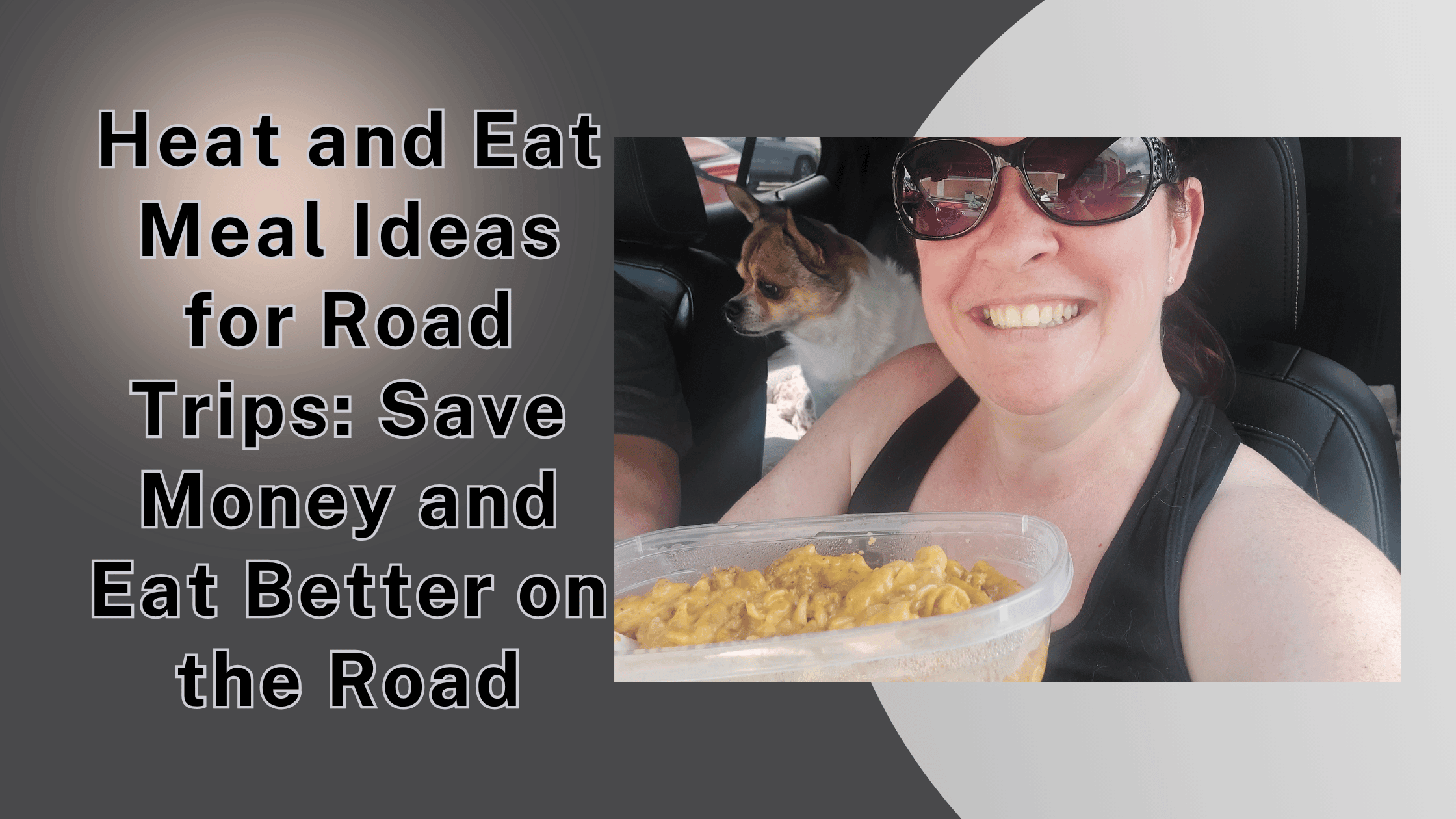
Before we left, I made a big batch of cheeseburger mac on Monday, April 27th. We portioned it into containers, packed it in our cooler, and ate part of it for lunch in Sweetwater, Tennessee on the first day of our trip. We heated it up at a Circle K gas station microwave around 2 p.m. and finished the rest later in the trip.
That one meal saved us at least one fast food stop. Probably $20 in food we didn’t have to buy. Plus, it was real food. Not stale chips and a soggy gas station sandwich.
The downside? I only made one batch. By day three, we were back to fast food, overpriced sit down restaurants, and quicker snacks. So this article is part recap, part brainstorm for what I want to try next time.
The Case for Pre-Cooked Road Trip Meals
Before I get into the meal ideas, let me make my case for why this is worth your time.
Fast food on a long road trip adds up fast. Two meals a day for two people, multiplied by five or seven or ten days, gets expensive.
Plus, fast food makes you feel sluggish. Greasy. Not great when you’ve got hours of driving, let alone hiking and adventuring ahead.
Pre-cooked meals from home solve all of that. You spend a few hours cooking before you leave.
You save money. You eat better. You feel better. You waste less time on the road waiting in drive-through lines.
The trick is picking the right meals. Some dishes travel really well. Others fall apart, get soggy, or taste weird after reheating.
My Cheeseburger Mac (The One I Actually Made)
Let me start with what worked. Cheeseburger mac is essentially ground beef, pasta, cheese sauce, and seasonings, all cooked together in one pot.
Why it works for road trips:
The pasta soaks up the sauce, so nothing gets watery. The cheese stays creamy even after reheating. The ground beef holds up well. It’s a complete meal in one container, so you don’t need to pack sides.
I packed individual portions in microwave-safe containers and away we went on our trip. Reheating took about 90 seconds at any gas station microwave.
Other Meal Ideas Worth Trying
Here’s my running list of road trip meal ideas I want to try on future trips, plus a few that other travelers swear by.
One-Pot Pastas and Casseroles
Baked ziti, lasagna cut into single-serving squares, mac and cheese with bacon or chicken added, beef stroganoff over noodles. These all reheat beautifully and stay flavorful. Cut them into individual portions before you leave so you can grab one container at a time.
Soups, Stews, and Chilis
Beef stew, chili, chicken tortilla soup, taco soup, gumbo, vegetable beef soup. These actually taste better the next day after the flavors marry. Pack them in thermos containers if you want them hot without reheating, or use microwave-safe containers if you don’t mind warming them up.
Admittedly, these are better during the colder months. But, in a pinch, they work even during the other months if you’re trying to pack on the go meals…
Burrito Bowls
Rice, black beans, seasoned ground beef or chicken, cheese, salsa, and any toppings you like. Pack the cold toppings (salsa, sour cream, guacamole) separately so the hot ingredients don’t make them weird. Assemble at the gas station after reheating the base.
Slow Cooker Magic Before You Leave
Pulled pork, shredded chicken, brisket, or beef and broccoli. Make a big batch in the slow cooker the night before you leave. Portion it out and pack with sides like rice, mashed potatoes, or sliders.
Pulled pork sandwiches travel especially well because you can pack the meat and the buns separately and assemble when ready.
Breakfast Options
Breakfast burritos wrapped in foil. Egg muffins (basically mini quiches in a muffin tin) loaded with whatever you like. Overnight oats in mason jars for cold breakfasts. Sausage and biscuit sandwiches you can reheat or eat cold.
Sandwich and Wrap Combos
Chicken salad wraps, tuna salad sandwiches, deli meat wraps with cheese and veggies. These don’t even need reheating, which makes them perfect for hot weather or when you can’t find a microwave.
Comfort Food Classics
Sloppy joes (pack the sauce and buns separately), meatballs in sauce, beef and broccoli over rice, sausage and peppers, sausage gravy with biscuits, chicken and dumplings.
Tools You’ll Want
To make this work, you need a few basic items.
– A good cooler is essential. A regular soft-sided cooler works for most short trips. For longer trips or hot weather, consider a 12-volt electric cooler that plugs into your car’s outlet and keeps food cold without ice.
– Microwave-safe containers with tight lids. Glass containers work best for reheating, but they’re heavier and breakable. Plastic containers labeled as microwave-safe are lighter and more practical for travel.
– A small insulated bag or thermos for hot soups and stews. This lets you eat hot food without needing to reheat.
– Plates, utensils, napkins, and paper towels. Pack a small kit with reusable or disposable options.
– Don’t forget to clean the hand sanitizer for cleanup.
Note: Some travelers swear by a Hot Logic Mini, which is a small electric food warmer that plugs into a 12-volt outlet or wall socket. It heats your meal slowly while you drive. I haven’t tried one yet, but it’s on my list.
Tips for Safe and Easy Road Trip Meals
Here’s where the practical advice comes in. A few things I learned (and a few things I wish I’d known earlier).
– Portion meals into single servings before you leave home. Don’t pack a giant casserole and try to scoop out portions on the road. You’ll make a mess and probably waste food.
– Label everything with the date you made it. Trust me. By day five, you won’t remember if you made the chili on Sunday or Tuesday.
– Freeze some meals for later in the trip. The cooler will keep them frozen or at least very cold, and they’ll thaw gradually. By day three or four, they’ll be ready to reheat.
– Plan your microwave stops. Most truck stops and many gas stations have a microwave near the coffee station. Circle K, Pilot, Flying J, and most major chains have them. Walmart and Walgreens sometimes have them. Some hotels have microwaves in the room or in a common area.
– Don’t keep cooked meals in the cooler longer than three or four days. Food safety matters even on vacation. If you’re planning a longer trip, restock from a grocery store along the way.
– Pack things that don’t need to be hot at all. Fresh fruit, cheese, hummus, crackers, hard-boiled eggs, beef jerky, and trail mix all make great car snacks.
Cost Comparison
Let me run the numbers for fun.
– Fast food breakfast for two: about $15.
– Fast food lunch for two: about $20.
– Fast food dinner for two: about $25 (because we ALWAYS split a meal!).
That’s $60 a day on the low end, before any drinks or snacks.
A pre-cooked meal from home costs maybe $5 to $8 in ingredients for two servings. If you cook five meals before leaving, you’ve spent about $30 to $40 on food and replaced two or three fast food stops. You’ve saved at least $100 over the course of a multi-day trip.
That’s real money. And you’ve eaten real food instead of mystery meat from a fast food chain.
What I’m Planning for Next Time
After our most recent trip, I’m planning to up my game. Here’s my mental list for the next road trip.
– Two batches of slow-cooked meals (probably pulled pork and beef stew)
– One pasta casserole portioned out
– A big container of chili
– Breakfast burritos pre-wrapped in foil
– Wraps and sandwich fixings for cold meals
– Trail mix, hard-boiled eggs, and fruit for snacks.
That should cover us for about a week without needing to hit a drive-through.
Final Thoughts on Heat and Eat Road Trip Meals
Eating well on the road takes a little planning, but the payoff is huge. You save money. You feel better. You spend less time waiting in drive-throughs. And honestly, your own cooking usually tastes better than anything you’d grab at a rest stop.
The cheeseburger mac was a great start for our last trip. Next time, I’ll do better.
If you’ve got road trip meal ideas you swear by, I want to hear them. Hit me up on Facebook and let me know what’s working for you. I’m always looking for new ideas to add to the rotation.
Now if you’ll excuse me, I’m going to go meal plan for our next road trip. It’s never too early to start.