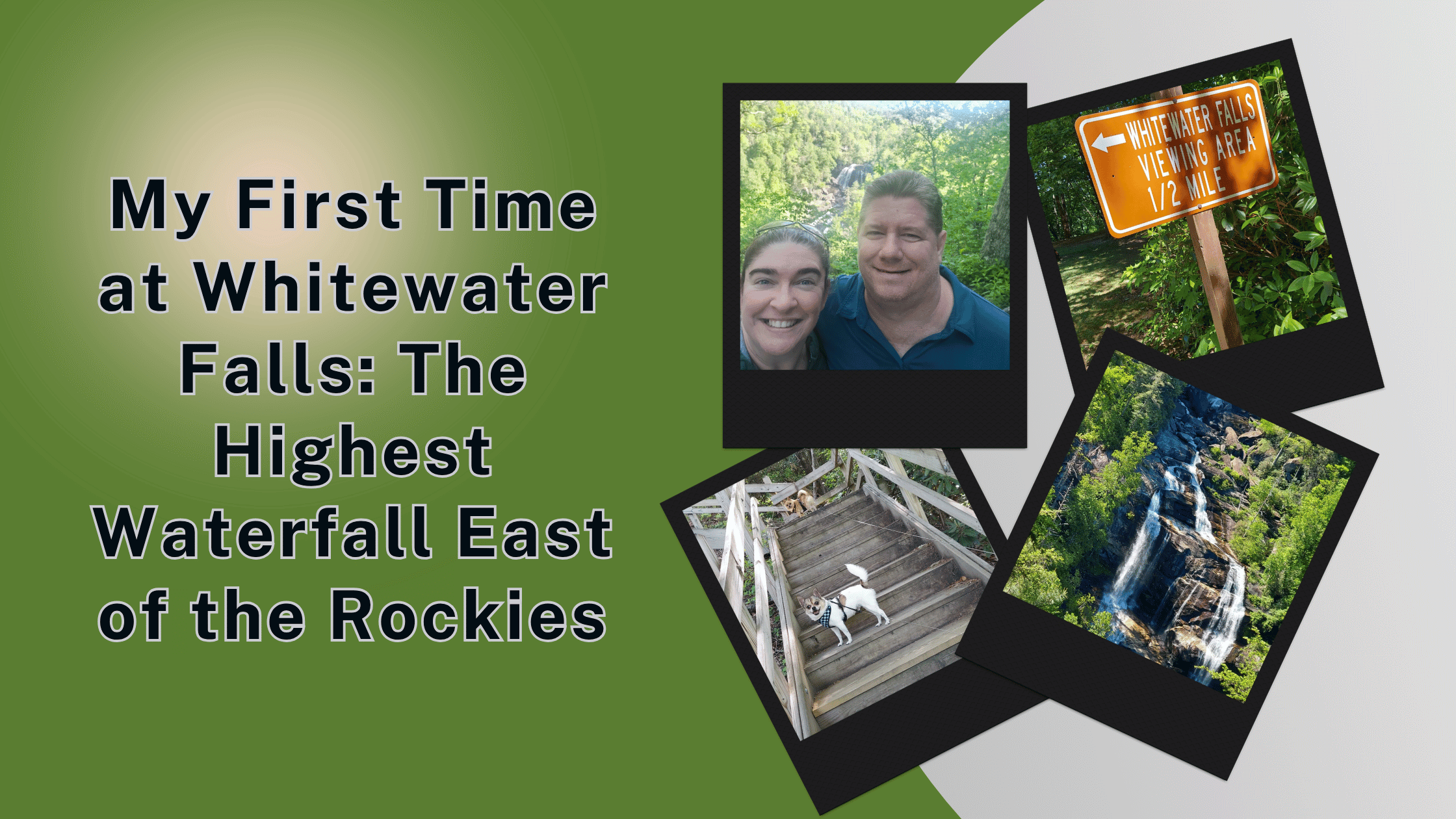
My First Time at Whitewater Falls: The Highest Waterfall East of the Rockies

My First Time at Whitewater Falls_ The Highest Waterfall East of the Rockies

Whitewater Falls in North Carolina drops 411 feet and is gorgeous. Here’s what to expect on this short but stunning hike in Nantahala National Forest.

What is Whitewater Falls?

If you’ve never heard of Whitewater Falls, allow me to introduce you to the highest waterfall east of the Rocky Mountains.

Upper Whitewater Falls drops 411 feet down a rocky cliff in the Nantahala National Forest in North Carolina. There’s also a Lower Whitewater Falls in South Carolina that drops another 400 feet. Together, the falls span 811 feet of waterfall drama between the upper and lower sections.

The Upper Falls is the one most visitors see. It’s about an hour and a half southwest of Asheville, North Carolina, near the South Carolina state line. The trailhead is just off NC-281, near Cashiers.

You can read more about it on the USDA Forest Service page for Whitewater Falls.

Know Before You Go

A first-timer’s guide to Whitewater Falls so you don’t get caught off guard:

  • There’s a small parking fee (usually $3 to $5 per vehicle, paid at the kiosk)
  • The America the Beautiful park pass gets you in free
  • The paved trail to the upper overlook is about a quarter mile each way
  • Adding the lower overlook means 154 wooden stairs each direction (so 308 total round trip)
  • The full hike is about 1 mile round trip when you do both overlooks
  • The trail is wheelchair-friendly only to the upper overlook
  • Dogs are allowed on leash (but you’ll want to carry them up and down the stairs!)
  • Restrooms and picnic tables are available at the parking area
  • No cell service in most of the area
  • Open dawn to dusk daily
  • Bring water – and more than you think you will need! (especially in warmer weather)
  • Several deaths have happened from people venturing off the trail. Seriously! There are signs warning people to stay on the path for a reason!
  • No camping or fires allowed at the recreation area

How We Ended Up at Whitewater Falls

Sunday, May 3rd was supposed to be the day we hiked Whitewater Falls. Then it rained all day Saturday, and we got delayed at California Dreaming in Augusta with that whole steak saga. So we ended up tackling Whitewater Falls on Sunday after a Bojangles breakfast (which was good, even if it wasn’t healthy) and a stop at Bobby Brown State Park.

By the time we made it to the Nantahala National Forest, the rain was completely cleared from the radar and the day was sunny and bright. And the falls? Well, they were running strong thanks to all that previous day’s precipitation.

The Walk to the Upper Overlook

The paved trail starts at the end of the parking lot and curves into the woods. You’re immediately in this beautiful Appalachian forest with tall trees, ferns, and the kind of dense green that makes you forget you’re not far from a major road.

The first quarter mile is easy. The grade is gentle, the surface is paved, and you can hear the falls before you see them. That’s one of my favorite things about waterfall hikes. The sound builds gradually, and your anticipation builds with it.

When you reach the upper overlook, you get your first view of Upper Whitewater Falls cascading 411 feet down the cliff. The view is wide and impressive, though some trees do partially block the bottom of the falls from this angle.

If you’re not up for taking all those stairs, the upper overlook gives you a great experience and you can turn around here. The trail is fully accessible to wheelchairs and strollers up to this point.

Then We Did the Stairs

We decided to go for it. I workout after all. Ha!

The lower overlook is reached by going down 154 wooden steps. That’s a lot of stairs. The grade is steep, and the railings are basically required. You feel like you’re descending into the canyon itself.

But here’s the payoff. The lower overlook gives you a much better, unobstructed view of the entire waterfall. The platform is wide enough to fit a dozen people or so, though the prime center spots are limited and you may have to wait your turn for the best view.

Standing at the lower overlook with the falls thundering down across the canyon was one of those moments where you forget to take pictures because you’re just staring. The water sparkles. The mist drifts up. The sound is incredible.

We took plenty of pictures eventually, of course. We always do.

The Climb Back Up

I’ll be honest. The 154 stairs back up were harder than going down.

By the time we hit the top, my calves were on fire and I was breathing hard. Jeremy was doing better than me because of my left knee issues, but it was still pretty intense for both of us! We took a couple of breaks on the way up because we knew that pushing too hard would just leave us shaky.

If you’re not in great shape, those stairs are a serious workout. Take your time. Use the railings. Bring water.

The Detour to Duke Energy’s Bad Creek

After we finished Whitewater Falls, we drove over to the Duke Energy Bad Creek Hydroelectric facility. They have a turbine pump that’s part of their pumped storage system, and you can see an overlook of Destination Oconee from there. (That’s O-C-O-N-E-E if you’re looking it up.)

It’s not a hiking destination, but it’s a cool stop if you’re already in the area. You get a different vantage point on the gorge system and Lake Jocassee. The Foothills Trail also has an access point here, which leads to the Lower Whitewater Falls if you want a longer hike.

The Foothills Trail

Speaking of the Foothills Trail… We did a small section of it called the Lake Jocassee Foothills Trail. The full Foothills Trail is 77 miles long and stretches across the Blue Ridge Mountains, but you can do short sections without committing to a multi-day hike.

If you’re an experienced hiker, you can actually do an 8.5-mile one-way hike from the Upper Whitewater Falls overlook along the Foothills Trail to the Lower Whitewater Falls overlook in South Carolina. That requires shuttle planning or a serious commitment to backtracking.

A shorter option is to access the Lower Whitewater Falls from the Bad Creek trailhead, which is about a 2-mile one-way hike. The total distance is roughly 4.3 miles round trip and considered moderate.

We didn’t have the energy for that on our trip since we were doing so many hikes and walks, but I’d love to come back and do it someday.

Moody Springs and Other Pretty Spots

On our way out of the area, we stopped at Moody Springs and snapped a quick picture. It’s a small, easy-to-miss spot, but it’s pretty.

The whole region around Whitewater Falls is full of these little surprises. Pretty creeks, scenic overlooks, hidden trails. If you’ve got a full day, you can chain together multiple waterfall stops in one outing.

Wildlife and Plants

The trail to Whitewater Falls is known for wildflowers, especially in early to mid April. We were just past peak wildflower season when we visited in May, but I still spotted some pretty blooms along the trail.

Common wildflowers in the area include Vasey’s trillium, Catesby’s trillium, trailing arbutus, mayapple, sweet white violet, and showy orchid. If you’re a flower person, plan your visit for spring.

I didn’t see any wildlife up close, but the Nantahala National Forest is home to black bears, white-tailed deer, wild turkeys, and various smaller animals. Keep an eye out, especially in early morning or late afternoon.

What I’d Do Differently

If I could redo our Whitewater Falls visit, here’s what I’d change:

– I’d give myself more time. We were trying to fit too much into one day, and Whitewater Falls deserves at least a couple of hours.

– I’d add the Lower Falls hike from Bad Creek if my legs were up to it. Knowing now that Lower Whitewater Falls is just as impressive (though smaller), I’d want to see both.

– I’d pack more water. The hike up those stairs takes more out of you than you’d expect.

– I’d visit during the wildflower season if possible. Mid-April is supposedly peak, and the trail is supposed to be incredible.

Why It’s Worth the Stop

Whitewater Falls is the kind of natural wonder that reminds you why you take road trips. You drive for hours, you park, you walk a half mile, and suddenly you’re standing in front of one of the most impressive waterfalls in the eastern United States.

The fact that it’s named “Whitewater Falls” in a region with about ten thousand waterfalls is telling. It earned that name.

Final Thoughts on Whitewater Falls

If you’re driving anywhere near the North Carolina and South Carolina border, make the detour to Whitewater Falls. The parking fee is cheap, the hike is short, and the views are unforgettable.

The 154 stairs to the lower overlook are absolutely worth it if you’re physically able. The upper overlook is great, but the lower view is the one that knocks your socks off.

This was hands down one of the best hikes of our entire road trip. We were tired, we were sore, and we were stunned by the beauty of it all.

I’m already planning my return trip. Next time, I’m tackling the Lower Falls too.
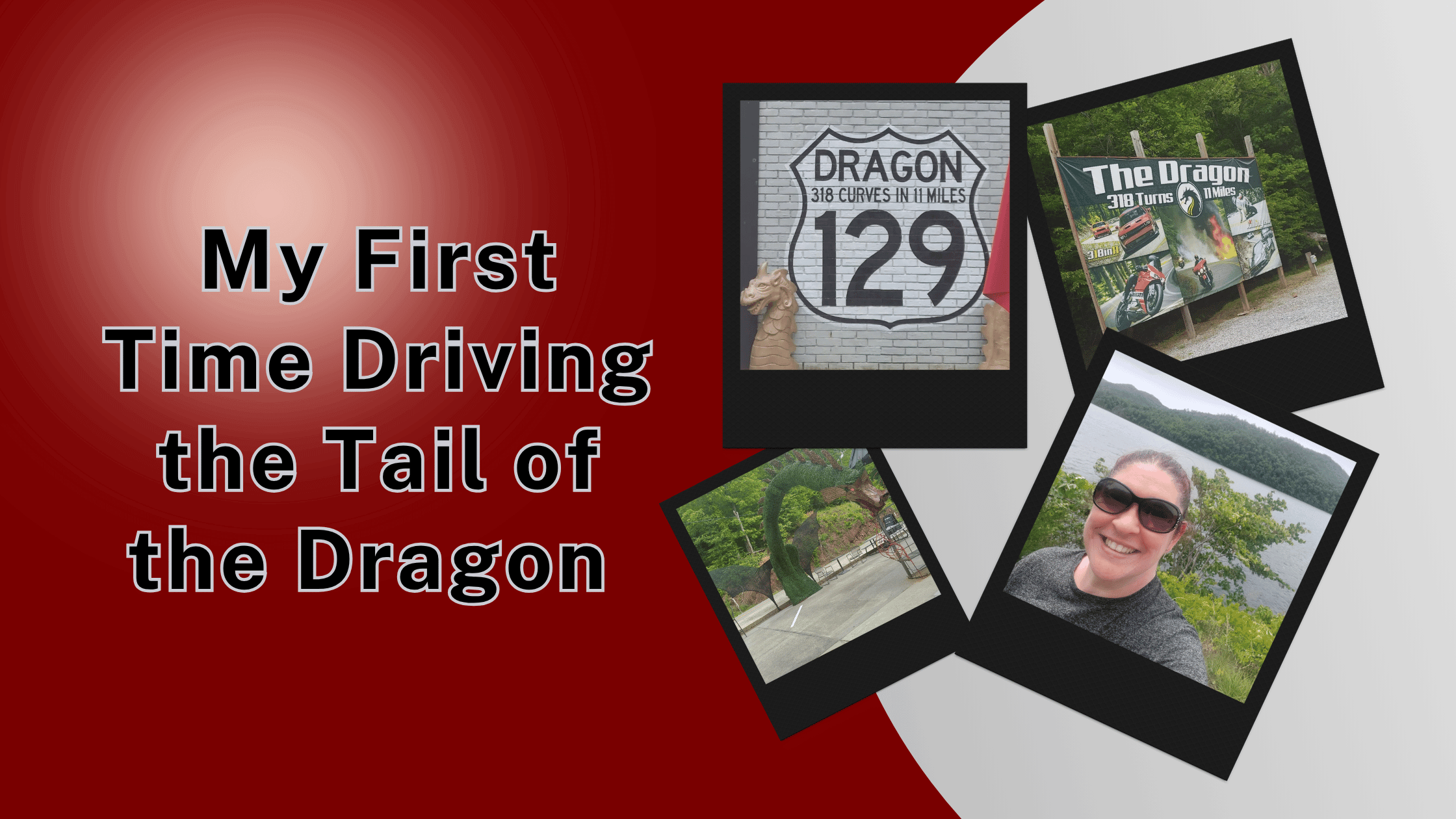
My First Time Driving the Tail of the Dragon and Why Photos from 129 Caught My Eye

Driving the Tail of the Dragon was both terrifying and beautiful. Plus, why the roadside photographers on US 129 are running a clever little business.

What is the Tail of the Dragon?

Before our road trip, I’d heard about the Tail of the Dragon in passing but didn’t really know what it was. So in case you’re like I was, let me catch you up.

The Tail of the Dragon is an 11-mile stretch of US Route 129 that runs between Tennessee and North Carolina. It’s known for one wild fact. There are 318 curves packed into those 11 miles. That’s almost 29 curves per mile, which is insane.

It straddles the border at Deals Gap, which sits between the Great Smoky Mountains National Park and Cherokee National Forest. There are no houses, no driveways, no intersections, and no businesses along the road itself. Just curves, trees, and (sometimes) other drivers and motorcyclists.

You can read all about its history and current conditions on the official Tail of the Dragon website.

Know Before You Go

If you’re planning to drive the Tail of the Dragon for the first time, here are some things you should know:

  • The road is two lanes with no shoulders and very few pull-offs, so committed driving is the only option once you start
    • We used these pull-offs a LOT to let people pass us…
  • There are 318 curves in 11 miles, including some hairpin turns
  • Motorcyclists love this road and tend to drive it fast, so be alert for bikes
  • Trucks and large vehicles are not recommended (and in some sections, prohibited)
  • The road runs between Deals Gap, North Carolina and the Tabcat Creek Bridge in Tennessee
  • The Deals Gap Motorcycle Resort sits at one end and is a fun stop for snacks, swag, and the famous Tree of Shame
    • I regret we missed seeing this!
  • Cell service is spotty to nonexistent along most of the route
  • Best weather is dry and clear, since rain makes the curves more dangerous
  • Plan extra time, because you’ll want to stop at any pull-off you can find for pictures
  • Don’t try to drive it after dark unless you really know the road

Why I Was Nervous

I’m going to be honest with y’all. Windy roads make me anxious.

I’ve never exactly been a fan of mountain driving. The combination of tight curves, steep drops, and unfamiliar terrain stresses me out. So when Jeremy and I decided to add the Tail of the Dragon to our route home from Florida, I was already psyching myself out before we even got there.

Jeremy was driving, which helped. He’s a steady, patient driver who takes mountain roads at a comfortable pace. But even with him at the wheel, I was gripping the door handle for most of the 11 miles.

What It Actually Felt Like

The first few curves weren’t bad. I thought, “Okay, this isn’t so terrible.” Then we hit a hairpin curve, and I felt my stomach drop into my shoes.

Some of the curves are named, by the way. There’s Copperhead Corner, Hog Pen Bend, Wheelie Hell, Shade Tree Corner, Mud Corner, Sunset Corner, Gravity Cavity, Beginner’s End, and Brake or Bust Bend. Those names exist for a reason.

The good news is that the scenery is genuinely beautiful. Even though most of the road is just walls of trees on both sides, you catch glimpses of mountain views, rocky overhangs, and the occasional creek or stream. 

Some of the spots we saw were so pretty that I wished we could pull over. But there aren’t many places to do that safely.

After 11 miles, we made it through. I was relieved. Jeremy was happy. And I had a story to tell.

The Roadside Photographers

This is the part of the Tail of the Dragon story I really want to talk about.

As we drove the road, I started noticing tents set up at strategic spots along the curves. Inside each tent were two photographers. They had professional cameras and stood completely still as cars and motorcycles passed by, snapping pictures of every vehicle that came through.

I counted at least two companies with their own tents. 129 Slayer and 129 Photos. There may have been others I missed.

I learned later that there’s a third major company called Killboy, plus a smaller one called Moonshine Photo. So there are usually four or five different photography businesses working the same 11 miles of road.

You can find them online at 129photos.com and at the 129 Slayer store. Each one has a website where you search by date and a rough time estimate, find your vehicle, and buy your photos.

How the Photos from 129 Business Works

The system is pretty clever. Photographers shoot every day from about 9 a.m. to 6 p.m. Each photo gets tagged with the date and time. You go home, pull up the company’s website, search by the date you drove the road, and find your vehicle.

The downloads start at around $8.50 for a high-resolution digital image. That’s the entry-level price for a basic download. You can also buy prints, framed photos, photos on mugs and tumblers, road signs with your image, and posters. Different sizes and products cost different amounts.

We didn’t buy any photos because we drove an unremarkable vehicle, and honestly, the experience of being on the road was more important to me than the souvenir. But if we’d been on a motorcycle or in a sports car, I might have grabbed one.

My Honest Take on the Business

As someone who used to be a photographer myself, I respect this hustle.

Think about it. You set up a tent in a popular spot. You take pictures all day. You tag and upload them to a website. People go home, find their photos, and pay you. You barely have to interact with customers. You sell digital downloads with practically zero overhead after the initial setup.

Is it a fortune? Probably not. But it’s a clever way to make a living doing photography in a beautiful spot, and the demand is consistent because thousands of drivers and motorcyclists hit this road every year.

I do wonder how the permitting works.

– Are these photographers permitted by the local jurisdictions?

– Are they private contractors operating on public land or private property?

I couldn’t find a clear answer, and I’m curious about the legal side. But the customers don’t seem to care, and the business has been operating for years, so somebody must have it figured out.

For anyone reading this who’s a creative entrepreneur, I think there’s something interesting here. Find a high-traffic location with built-in demand. Set up a system. Let the technology and the volume do the work.

What I’d Do Differently for the Tail of the Dragon

Looking back on driving the Tail of the Dragon, I have a few thoughts.

I’d give myself more mental prep time. Knowing that 318 curves was going to feel like 318 curves would have helped me brace for it.

I’d consider doing the drive earlier in the day when I’m fresher and more alert. We did it later in the trip when we were already tired from days of driving and hiking.

I’d plan to stop at the Deals Gap Motorcycle Resort at the end. We didn’t make time for it, and that’s where you can see the Tree of Shame (a tree decorated with motorcycle parts from crashes) and pick up the official Dragon Sticker.

I might take a friend who isn’t scared of curves so my anxiety wouldn’t dampen the experience for Jeremy.

The Lake or River After the Dragon

After we finished the Tail of the Dragon, we drove past this beautiful body of water on the side of the road. I thought it was a lake at first. Looking back, it was probably a river. The scenery was so pretty that we slowed down just to look.

The road through the Smoky Mountains region has so many of these little surprises. Lakes, rivers, scenic overlooks, and forest stretches that go on for miles. The Tail of the Dragon may be the famous part, but the rest of the drive is honestly just as beautiful (and a lot less terrifying).

Would I Drive It Again?

Honestly? Yes. Probably still as a passenger though. I have ZERO interest in ever driving it.

If you’re a thrill seeker, a motorcyclist, or a sports car enthusiast, the Tail of the Dragon is a bucket list drive. You’ll love it.

If you’re like me and prefer your roads straight and your scenery accessible by easy walking trails, the Tail of the Dragon is something you do at least once to say you did it. Then you find a less stressful route home.

Final Thoughts on the Tail of the Dragon

The Tail of the Dragon lived up to its reputation. 318 curves, 11 miles, terrifying and beautiful all at once.

The photography hustle along the route was an unexpected highlight for me. It’s the kind of clever side business that makes you think about all the other ways photographers and creative entrepreneurs can build income streams in unique places.

Would I recommend driving the Tail of the Dragon? Absolutely, if you’ve got the stomach for it. Just make sure you have a steady driver, a clear day, and maybe a slice of cheesecake waiting for you at the end as a reward.

Next time, I might just buy myself one of those Dragon photos. Even from a regular old SUV.

My First Time at Jungle Jim’s International Market: A Food Lover’s Disney World

First time at Jungle Jim’s International Market in Fairfield, Ohio? Here’s what to expect from one of the most overwhelming, exciting, and unforgettable food experiences in the Midwest.

What Even Is Jungle Jim’s International Market?

I mentioned I was headed to Ohio for Valentine’s Day, and my gym buddy Sara told me a little about Jungle Jim’s International Market. She said we should definitely stop by, but nothing could have prepared me for what it actually was.

My husband and I made the two-hour drive out to the Fairfield, Ohio location on Valentine’s Day, and while a grocery store might seem like an unconventional way to spend the holiday, it turned out to be part of one of the most fun and memorable outings we’ve had in a long time.

To give you a little context about what this place even is: Jungle Jim’s got its start back in 1971 when a man named “Jungle” Jim Bonaminio set up a roadside produce stand in a parking lot in Hamilton, Ohio.

It moved around a few times before he finally bought his own land, and the first actual store opened in 1975 with about 4,200 square feet of space. Over the decades, he just kept expanding and adding things at customer request.

In 1988, after visiting specialty markets in Chicago, he made the decision to turn it into a full international market and introduce the jungle theme. Today, the flagship Fairfield location sits at roughly 200,000 square feet and carries over 180,000 products. There’s a second location in Eastgate that opened in 2012. To put it plainly: this is not a grocery store. It is an experience.

Walking In: Disney World Vibes from the Start

Growing up in Tampa, my frame of reference for “overwhelming but magical” is Disney World. And I’m telling you, the moment we walked through those doors, that is exactly what came to mind.

Even the signage had this big, bright, theme-park energy that made you feel like you were somewhere special. The whole place has that same quality of being almost too much to take in at once, where you turn a corner and find something you never expected.

We got there a few hours before closing, which, as we quickly learned, was both plenty of time and somehow not enough. The first thing that greeted us near the entrance was a section full of novelty and gift items. Novelty snacks and treats, Harry Potter merchandise, goods tied to different movies and TV shows, all kinds of fun stuff that had nothing to do with your weekly grocery run. It immediately signaled that this place was not going to be your average shopping trip.

Here’s a fun video of the place to give you just a taste of all we saw:

Ice Cream, Wine, and Walking the Aisles

Then we spotted the ice cream shop. Inside the grocery store. We looked at each other and just laughed, because of course there’s an ice cream shop. We tried a few samples and then committed: I went with cookies and cream, and my husband got chocolate chip cookie dough. Walking around a massive international market eating ice cream cones felt a little absurd and completely wonderful.

From there, we noticed there was an actual bar inside the store where you could do wine tastings. So naturally, we walked over and I ordered a glass of raspberry truffle wine, which I had never tried before. At five dollars a glass, it felt like a no-brainer. There’s something deeply funny and delightful about sipping a glass of wine while wandering the aisles of a grocery store, and we leaned into it completely.

The International Food Selection Is Truly Something Else

With our drinks in hand, we made our way through the store and it just kept going. The wine section alone is staggering, with around 12,000 options. The liquor section is its own whole world. And then you hit the international aisles and that’s where things get truly impressive. 

There were dedicated sections for foods from countries all over the globe including African, Mexican, and Indian sections, and so many more. The store carries products from an enormous range of food cultures, and it’s one of those places where you find yourself stopping every few feet just to look at something you’ve never seen before. They also carry around 1,600 cheeses and 1,000 varieties of hot sauce, which sounds like a made-up number until you’re standing in front of the shelves.

We also came across the cigar area, which had a full humidor and everything you’d need if that’s your thing. But the moment that genuinely stopped us in our tracks was the live seafood section.

Lobsters and all kinds of fish were swimming in tanks, and there was an enormous variety of fresh fish available for purchase, including species neither of us had ever even heard of. Because we arrived later in the day, some of the stations were starting to close down and wrap things up, but they were still packaging product you could buy and the sheer scale of what they offer there was obvious even at the fishtail end of the day.

Three Hours Later, We Still Didn’t See Everything

We spent a solid three hours there and pretty much stayed until the store closed. And here’s the thing: we didn’t buy a single item to take home. We hadn’t gone in with a shopping mindset. We went for the experience, to see what all the fuss was about. And while I have zero regrets about how we spent those three hours, I do have one small regret about leaving empty-handed. 

Here’s a longer walkthrough video of the place so you can see what you’re really getting into if you visit:

Three Things I Learned from My First Time at Jungle Jim’s

1. Take advantage of the map. There is a reason this store provides a map, and you should absolutely pick one up the moment you walk in if you have never been there before. The place is enormous and organized in a way that makes sense once you understand it, but without some kind of guide you will wander aimlessly. Which is fun, but if you’re trying to actually find something, you’ll want the map.

2. If you’re going there to grocery shop, go in with a plan. I genuinely could not figure out how people use this as their regular grocery store, but there were absolutely people in there just doing their weekly shopping. I have so much respect for them. The selection is overwhelming in the best way, but if you walk in without a list and a strategy, you will be absolutely lost. There are too many options, too many sections, and too many distractions to just wing it.

3. Come ready to buy something. This is my biggest takeaway. We drove two hours to get there, and without a cooler in the car it wasn’t practical to bring home any of the cheeses, fresh seafood, or specialty foods that we were eyeing. I genuinely wish we had thought ahead and packed one. When you’re looking at live lobster tanks and walls of imported goods, you want to be in a position to actually take something home with you. Don’t make our mistake. Plan ahead, bring a cooler if you can, and come ready to treat yourself. Jungle Jim’s is the kind of place that deserves more than just a look around.

Wings and Views and Date Night: Twin Peaks vs. Hooters

We spent Valentine’s Day visiting both Hooters in Lexington and Twin Peaks in Ohio, and let’s just say the results were not even close.

The Most Fun Valentine’s Day Plan Ever (Well, For Us)

Let me set the scene for you. It was Valentine’s Day, and my husband and I decided to spend it the way most couples do: going to not one, but two breastaurants in the same day. 

Romantic? Maybe not in the traditional sense. But honestly? It turned into one of the most memorable days we’ve had in years, and a tale of two restaurants that couldn’t be more different.

A Little Background on Both Restaurants

First, a little history on both Twin Peaks and Hooters

Hooters was born on April Fools’ Day in 1983, in Clearwater, Florida, started by six businessmen who had zero restaurant experience between them. They were, by their own admission, just a bunch of guys who wanted a place to hang out. Well – one random Hooters press release I found cites October 4, 1983 as the opening day, but most sources say it started on April 1…

Somehow, that scrappy little idea turned into a cultural institution with locations across the globe. For a long time, it worked. The wings were iconic, the atmosphere was fun and a little kitschy, and it had this charm that made it feel like a place you could actually kick back and enjoy yourself.

Twin Peaks came along much later, founded in 2005 by Randy DeWitt and Scott Gordon in Lewisville, Texas. DeWitt had serious restaurant industry experience under his belt, and it shows. 

He saw a thriving sports bar market and set out to build something with a mountain lodge feel and a focus on quality. Twin Peaks started franchising in 2007 and has been growing ever since, with a made-from-scratch kitchen and their signature 29-degree beer served in frosted mugs as key selling points.

Our Hooters Experience: Nostalgia with a Side of Disappointment

Now, back to our Valentine’s Day adventure.

We started the day at Hooters for lunch, and I genuinely wanted to love it. My husband and I used to go to Hooters when we were first dating, and it held a special place in our hearts. But after being away for a few years (I’d say at least four or five), walking back in felt a little like running into someone you used to know and realizing they’ve changed in ways you can’t quite explain.

Our waitress was decent enough, but the energy just wasn’t there. The wings were underwhelming. The sauces lacked the punch we remembered. And my husband’s beloved buffalo shrimp? Flat. Not terrible, just not what we expected from a place that built its whole reputation on that kind of food. 

To be fair, Hooters has been going through some serious struggles lately, including sales that have dropped significantly over the past 15 years and a bankruptcy restructuring, with the original founding group now working to reclaim the brand and get it back to its roots. So maybe we caught them mid-identity-crisis. We genuinely hope they figure it out because there is nostalgia there, and nostalgia is a powerful thing.

Our Twin Peaks Experience: Everything Hooters Used to Be (and Then Some)

After a fun day at Jungle Jim’s International Market (because apparently we just go all out on Valentine’s Day), we headed to Twin Peaks in Ohio for dinner. And wow.

From the moment we walked in, the difference was noticeable. The restaurant was clean and well-kept. The mountain lodge atmosphere felt intentional and warm rather than like a theme someone gave up on halfway through.

Our server was genuinely attentive and friendly, not just going through the motions. The wings were better. The sauces were bolder and more flavorful. The cocktails tasted like someone actually cared about making them well.

Everything just felt elevated, like a place that has its standards set and actually holds to them.

The Verdict: Which One Is Worth Your Time?

So here is where we landed: we will happily drive an hour and a half to get to a Twin Peaks the next time we’re craving that whole experience. The food quality, the vibe, the service, the drinks… Twin Peaks delivered on every front where Hooters left us a little sad about the past.

Hooters invented the category. Twin Peaks perfected it. And on Valentine’s Day of all days, that felt like a verdict worth sharing.